Visions for EU Agriculture - EU Discovers People Have Been Exchanging Seeds Without a Proper Framework
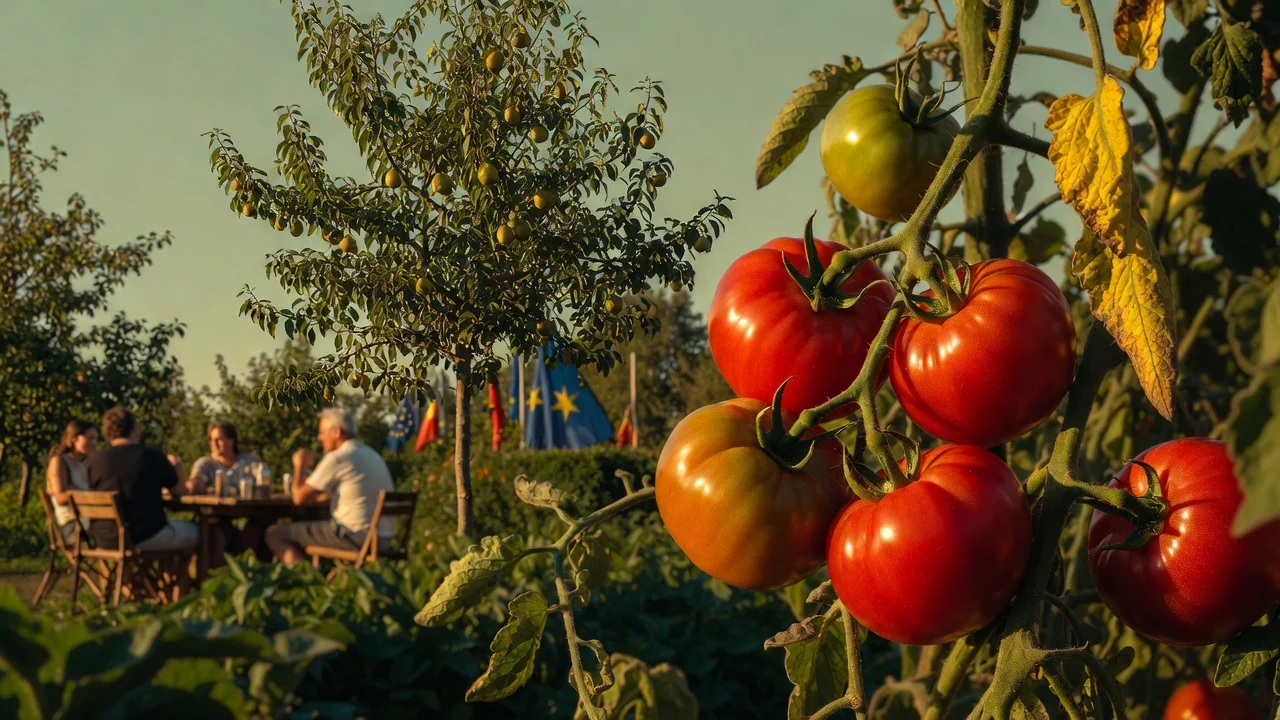
The European Union has reached a political agreement on new rules for plant reproductive material - seeds, cuttings, tubers, rootstocks, and other bits of living plant used to make more plants.
The rules will increase biodiversity, support conservation, improve quality, help farmers, strengthen resilience, simplify the system, modernise the market, and probably make your basil feel more European.
- Marie has grown the same old tomato variety in her inherited family garden for twenty years. Every autumn she dries a few seeds on kitchen paper and puts them in a reused envelope with handwriting on it. Her neighbour asks for some because the tomatoes actually taste of tomato.
- Jan has an old pear tree behind his house. The pears are ugly, small, and wonderful, which means no supermarket would ever touch them. His friend wants a graft from it for his own tree, because they just taste good.
- Take the local allotment club, where pensioners meet once a month to exchange seeds, complain about slugs, and maintain more agricultural knowledge than most ministries. Someone brought beans, someone brought pumpkin seeds, someone brought garlic, and someone brought unsolicited opinions about compost. The entire event starts to resemble a rural money-laundering operation.
- A tiny organic farmer swaps some grain seed with another farmer two valleys away because one field survived drought better than the other.
Ha! A potential unlawful interaction with plant reproductive material.
Meanwhile, large seed companies continue to operate in the normal adult world of lawyers, registrations, catalogues, intellectual property, compliance departments and consultants. Regulation is their friend.
And even before the law arrives with its forms and exemptions, the market has already trained ordinary people in the same lesson: do not save, do not repeat, do not become independent. Buy the packet again next spring.
The F1 Hybrid Trap
The dependency already exists in a perfectly legal form through F1 hybrids.
Most supermarket tomatoes are not genetically modified.
They are first-generation hybrids, produced by crossing two carefully selected parent lines so that the resulting plant has predictable commercial traits: uniform size, reliable yield, disease resistance, transportability and shelf life.
The problem begins when an ordinary person saves seeds from that tomato and plants them the following year. Those seeds produce the F2 generation, where the carefully combined traits of the F1 plant begin to separate again.
Instead of reproducing the same tomato, the next generation may split into a mixture of different shapes, strengths, flavours, yields, and weaknesses, depending on which traits reappear.
The plant is not sterile. It simply no longer breeds true.
So the gardener learns the rule of the modern seed economy: if you want the same result again next year, you buy again. No ban is required. The dependency has already been built into the biology of the product.
This is the genius of the modern European system. It never says, “You may not grow old beans.”
That would sound mad.
It says, “We support agrobiodiversity through a harmonised framework of proportionate derogations for specific categories of operators subject to conditions defined by competent authorities.”
In other parts of the world, people still exchange seeds and grafts without first establishing whether the activity falls under a proportionate derogation defined by competent authorities. In the United States, for example, gardening remains a largely private matter. American seed laws focus mainly on truthful labelling when seed is sold commercially.
Still, let us be fair. The European Union has finally noticed that people were still capable of exchanging small amounts of plant material without first obtaining permission from a competent authority.
This situation is now being corrected.
Sources
Mohlo by vás zaujímať