Amid Economic Crisis, Turkey Officially Declares Itself History’s Most Compassionate Empire
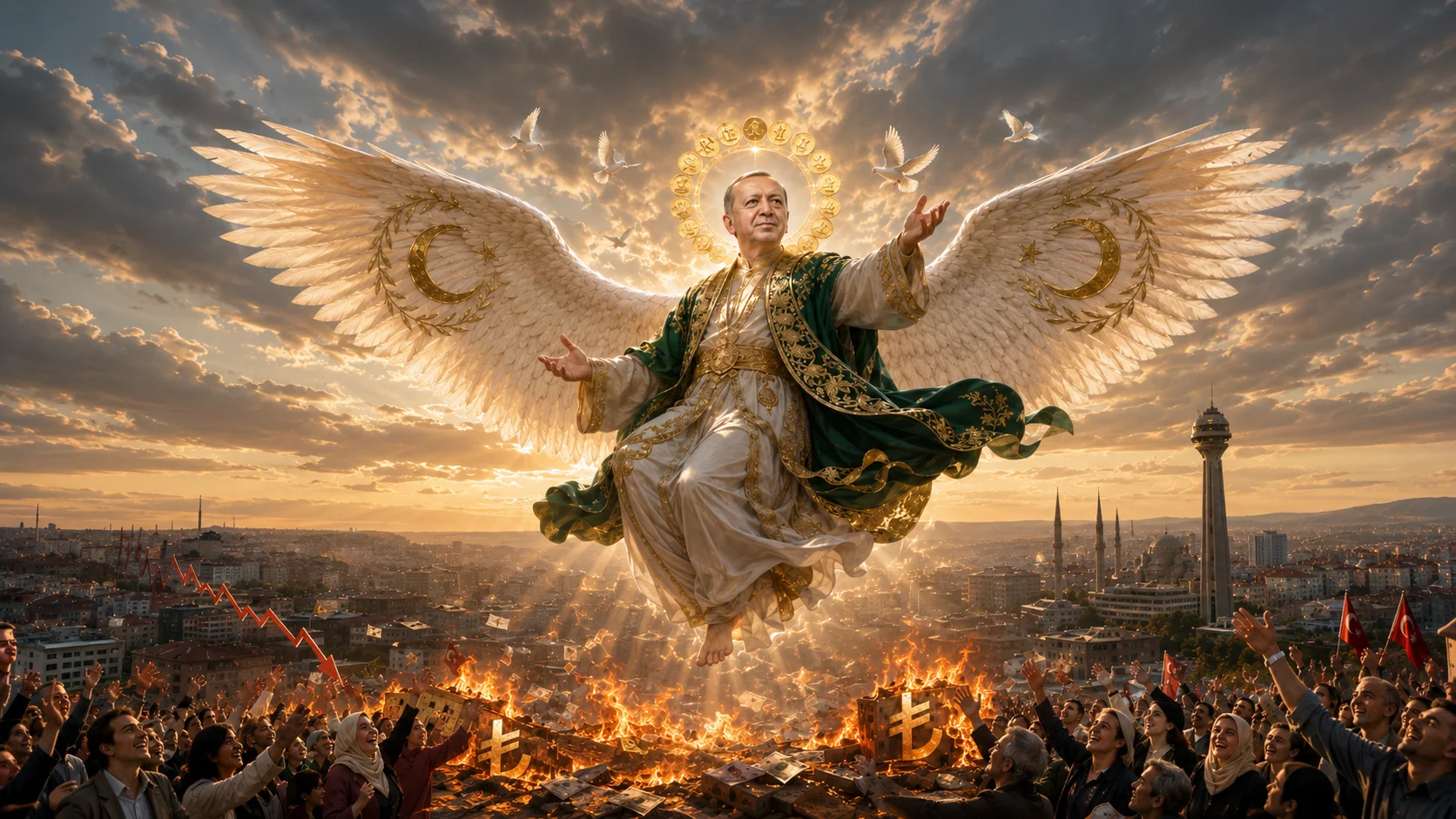
ANKARA - As the Turkish lira continues its impressive downfall and inflation remains comfortably in the “we don’t talk about that” range, the Republic of Turkey has achieved a historic milestone - it has officially declared itself the most compassionate empire in human history.
In response to Israel’s recent recognition of the Armenian Genocide, President Recep Tayyip Erdoğan stated:
...in our history, there have been no genocides, no massacres, oppression and no colonialism. Throughout our thousands of years of glorious history, there has only been justice & compassion.
According to the new official narrative, the Ottoman Empire’s expansion across three continents was not conquest, but an ambitious and largely successful community outreach programme.
The centuries-long devshirme system, in which Christian boys were taken from their families in the Balkans and Anatolia, converted to Islam and trained as Janissaries, has been reclassified as an “elite youth leadership and professional development scholarship”.
The events of 1915–1923, previously known to some as the Armenian Genocide, Greek Genocide and Assyrian Genocide, have been redesignated as “large-scale, state-coordinated population management and relocation initiatives in the eastern and western provinces.”
Participants were provided with fresh air, exercise, and the opportunity to see new parts of the empire, often at no cost to themselves. Official figures for those who unfortunately did not complete the programme remain classified for their own protection.
The 1937–38 operations in Dersim, in which thousands of Alevi Kurds were killed and many more deported, are now described as an “intensive regional stabilisation and integration campaign” carried out with characteristic Turkish warmth and efficiency.
When asked about the timeline, officials clarified that while Turkic groups only arrived in Anatolia in significant numbers after 1071, the “thousands of years of glorious history” includes all the years in which Turkey would have been compassionate had it existed yet.
President Erdoğan further cautioned Israel against testing Turkey’s patience, noting that the nation’s historic compassion should not be mistaken for weakness.
In response to growing cooperation between Greece, Cyprus, Israel, India and the United States against regional expansionism, officials stated that such alliances are merely the result of certain countries failing to appreciate Turkey’s generous historical contributions.
Regarding recent comments from the Russian side about potentially making Constantinople Christian again, the Ministry noted that such statements reflect a regrettable lack of understanding of Turkey’s long tradition of interfaith harmony.
On the matter of Turkish citizens living abroad, the government confirmed that hundreds of thousands of Turks were successfully exported to Germany and other European cities as part of a long-term cultural enrichment programme. Many of these citizens have chosen to remain abroad, where they continue to demonstrate national pride and strong support for the current leadership - often at significantly higher rates than voters inside Turkey.
The Ministry emphasised that dual citizenship allows these citizens to maintain their connection to the homeland while exercising their democratic rights from abroad. Exact figures regarding the number of dual citizens and their voting patterns remain classified for privacy reasons.
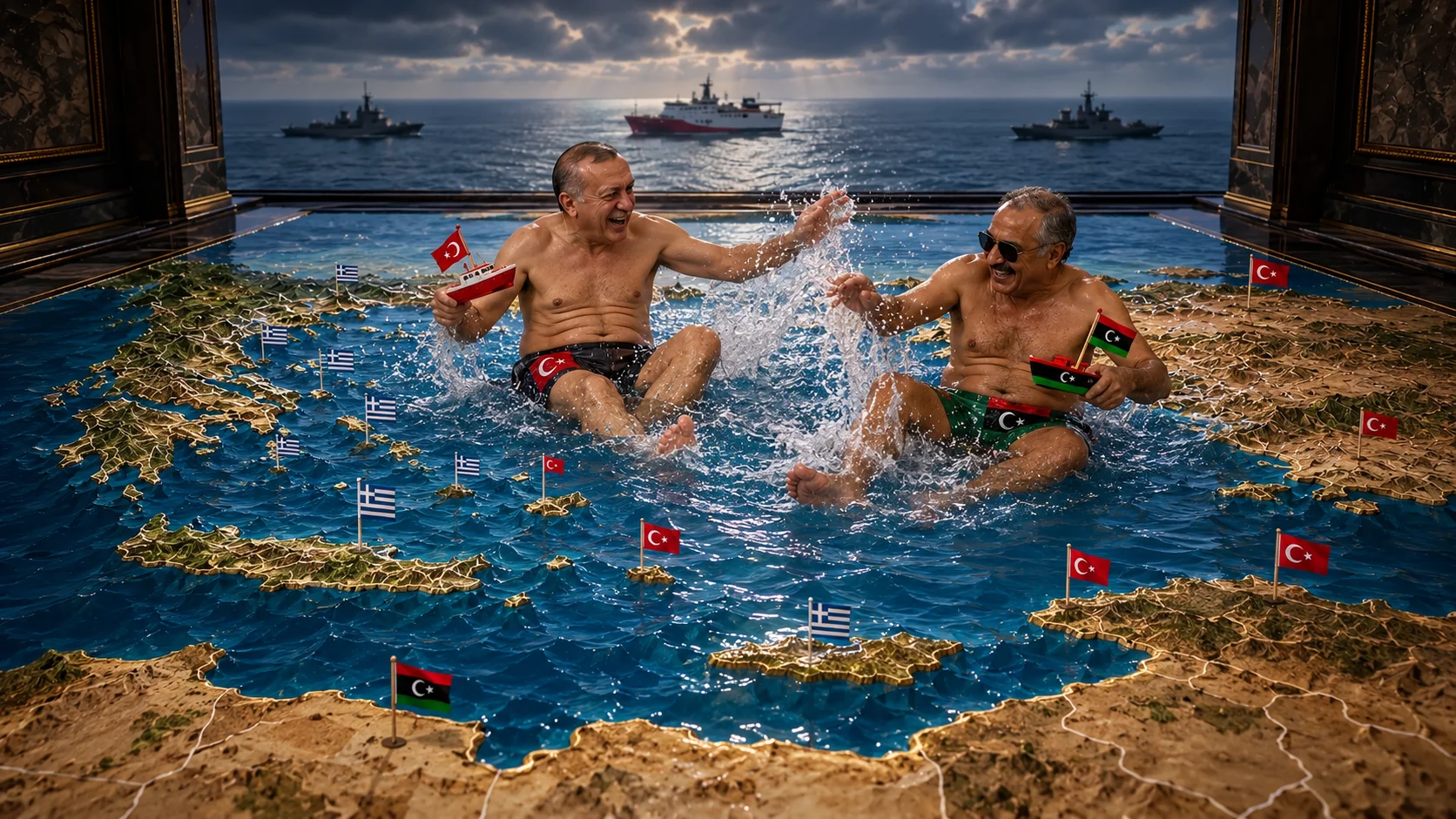
Concerning recent energy developments south of Crete, officials noted that certain foreign companies (Chevron) have shown interest in resources located in areas Turkey considers part of its legitimate maritime jurisdiction. These claims are fully supported by the forward-looking Blue Homeland doctrine.
Turkey’s Ministry of Historical Adjustment has announced that updated school textbooks will be available “as soon as the economy allows”, and that all previous versions containing inconvenient details have been sent for compassionate recycling.
Officials also expressed disappointment that certain NATO allies have selfishly refused to supply Turkey with the most advanced military technologies (F-35 exclusion, F-16 upgrade delays, CAATSA sanctions, etc.), citing irrelevant concerns over previous equipment purchases.
Finally, the government reiterated its long-standing desire to join the European Union, describing membership as the natural next step in Turkey’s historic journey of spreading justice and compassion across the continent. However, even the current European Commission President Ursula von der Leyen, has so far refrained from expressing any meaningful support for this endeavour. Officials expressed confidence that this hesitation is only temporary and will be overcome once European leaders fully appreciate Turkey’s unique contributions to continental stability and shared values.
Finally, officials stressed that the recent change of the country’s international name to Türkiye does not alter any historical facts.
Turkey has not yet announced which new record it plans to pursue next.
~~~~~~~~~~~~
Historical dump for interested readers:
1. Major expansions into Central Europe
In the 14th–15th centuries, Ottoman forces gradually conquered Byzantine and Serbian lands, up to central Europe. Rule involved devshirme levies, jizya taxes on Christians, and periodic harsh suppressions of revolts.
- Hungary & Central Europe: After the Ottoman victory at the Battle of Mohács (1526), much of central and southern Hungary came under Ottoman control or vassalage for roughly 150 years.
- The territory of present-day Slovakia was never fully occupied. Although Ottoman forces established some fortresses north of the Danube and launched frequent raids, local Slovak populations, together with other Royal Hungarian forces, successfully resisted large-scale conquest. These efforts, combined with the broader counter-offensive after the failed Ottoman siege of Vienna in 1683, ultimately contributed to driving the Ottomans out of the region by the end of the 17th century.
- Siege of Vienna 1529 (First Turkish Siege): Suleiman the Magnificent led ~100,000+ Ottoman troops against Vienna (Holy Roman Empire/Habsburgs). Failed after two weeks of heavy fighting and mining attempts. Marked the peak of Ottoman westward expansion into Central Europe at the time. Heavy casualties; Ottomans retreated in bad weather.
- Siege/Battle of Vienna 1683 (Second Turkish Siege): Ottoman army (~150,000–200,000 under Grand Vizier Kara Mustafa) besieged Vienna for nearly two months. Failed dramatically with the relief by Polish King John III Sobieski (largest cavalry charge in history). Major turning point; Ottomans pushed back from Central Europe. Significant civilian enslavement reported (~57,000 in some accounts).
2. Serbia, Bulgaria
Centuries of Ottoman rule after the fall of the Serbian Despotate.
- First Serbian Uprising (1804–1813) and Second (1815) eventually led to autonomy, but involved massacres of Serb civilians. In the late Ottoman period (1878–1912), violence in Kosovo and southern areas by Ottoman troops, Albanian bands, and Circassians led to ~60,000 Serbs killed or forced to migrate in some estimates.
- Bulgarians: 1876 April Uprising suppressed with extreme brutality. Irregular Ottoman forces massacred thousands of civilians; villages and monasteries destroyed. Estimates of deaths in the thousands to ~15,000+ in the Philippopolis area alone.
3. Greece
Ottoman rule over Greek populations began with the fall of Constantinople in 1453, when the city was sacked, thousands were massacred or enslaved, and the Hagia Sophia was converted into a mosque.
Over the following centuries, Greeks lived as second-class dhimmis under the Ottoman millet system, subject to special taxes (jizya), legal discrimination, and periodic violence.
The 19th century saw repeated Greek uprisings met with extreme brutality.
- During the Greek War of Independence (1821–1829), Ottoman forces carried out widespread massacres of Greek civilians. The most infamous was the Chios massacre of 1822, in which tens of thousands of islanders were killed, enslaved, or deported. Similar mass killings occurred in Constantinople, the Peloponnese, and other islands and mainland regions.
- Cretan revolts were also bloodily suppressed, particularly the Great Cretan Revolt of 1866–1869 and the 1897–1898 uprising, both of which involved large-scale massacres of Greek civilians on the island.
In the early 20th century, violence against Greeks intensified.
- During the Balkan Wars (1912–1913), Greek populations in Thrace and western Anatolia suffered attacks and expulsions. This escalated dramatically during World War I and its aftermath.
- Between 1914 and 1923, Ottoman and Turkish nationalist forces conducted a systematic campaign of massacres, forced deportations, and death marches against Greek communities in Anatolia and the Pontus region. This period, known as the Pontic Greek Genocide, resulted in the deaths of an estimated 300,000 to over 900,000 Greeks. The campaign culminated in the Burning of Smyrna in September 1922, during which tens of thousands of Greeks and Armenians were killed as the city was destroyed.
- The remaining Greek population of Anatolia was largely removed through the compulsory population exchange of 1923. Later anti-Greek violence continued under the Turkish Republic, most notably with the Istanbul Pogrom of 1955.
Modern Turkish Aggression in the Aegean Sea and Eastern Mediterranean
Turkey has pursued a consistently aggressive policy in the Aegean Sea and Eastern Mediterranean aimed at expanding its maritime claims at Greece’s expense.
- Turkey routinely carries out thousands of airspace violations and naval incursions into Greek territorial waters every year. In 2020, Turkey escalated dramatically by sending the research vessel Oruç Reis, escorted by warships, to conduct seismic surveys deep inside Greece’s exclusive economic zone. This move triggered a prolonged military standoff and brought the two countries closer to direct conflict than at any point since 1996. Turkish officials, including President Erdoğan, openly threaten Greece with military action, with statements such as “we can come suddenly one night.”
- These provocations are justified in Turkey through the so-called “Blue Homeland” (Mavi Vatan) doctrine - a pseudo-strategic fantasy cooked up by Turkish admirals that claims vast swathes of the Aegean and Eastern Mediterranean as Turkish sovereign waters. According to this doctrine, Greek islands supposedly generate no exclusive economic zone, while Turkey somehow has maritime rights stretching across half the Mediterranean.
- In 2019, Turkey signed a maritime delimitation agreement with Libya’s Government of National Accord that completely ignored Greek and Cypriot rights and attempted to slice through Greece’s EEZ. The agreement was immediately condemned as illegal by Greece, the European Union, and the United States.
- These actions directly violate the United Nations Convention on the Law of the Sea (UNCLOS), which Greece has ratified and which clearly states that islands are entitled to full exclusive economic zones. Turkey has refused to sign UNCLOS.
- Greek governments, the European Union, and the European Parliament have repeatedly condemned Turkey’s behavior as aggressive, illegal, and a threat to regional stability.
- Despite being a NATO member, Turkey has used military force and the threat of force in an attempt to bully Greece into surrendering its sovereign rights under international law. The so-called Blue Homeland remains little more than nationalist fan fiction.
4. Cyprus
The Ottoman Empire conquered Cyprus from the Venetians in 1570–1571. The sieges of Nicosia and Famagusta were marked by heavy fighting and massacres of the defenders and civilian population. After the conquest, Cyprus became an Ottoman province.
- In 1821, during the Greek War of Independence, Ottoman authorities carried out mass executions and massacres of Greek Cypriot leaders and civilians across the island.
- After independence in 1960, intercommunal violence between Greek and Turkish Cypriots escalated in the 1960s and early 1970s.
- In July 1974, following a coup backed by the Greek military junta aimed at enosis (union with Greece), Turkey launched a military invasion of northern Cyprus. Turkish forces rapidly occupied approximately 37% of the island. The invasion and subsequent occupation involved widespread atrocities against Greek Cypriot civilians, including mass killings, rape, torture, and looting. Estimates of Greek Cypriots killed during and immediately after the invasion range from 3,000 to over 5,000, with several thousand more listed as missing. Around 200,000 Greek Cypriots were forcibly displaced from the north. Turkish troops and irregulars were responsible for many of the documented massacres and human rights violations.
- Following the invasion, Turkey facilitated the settlement of tens of thousands of Turkish mainlanders in northern Cyprus. The island remains divided to this day, with the self-declared Turkish Republic of Northern Cyprus recognized only by Turkey. The 1974 invasion and ongoing occupation are considered illegal under international law by the United Nations and the vast majority of countries.
5. Kurds and internal “pacification” campaigns
The Ottoman Empire initially ruled Kurdish regions through semi-autonomous Kurdish emirates.
After the founding of the Turkish Republic in 1923, the new state pursued aggressive policies of Turkification and centralization. Kurdish identity was denied, the Kurdish language was banned in public life and education.
- The Sheikh Said Rebellion (1925) was one of the first large-scale Kurdish revolts against the Republic. It was brutally crushed, with thousands killed and Sheikh Said himself executed.
- The most infamous campaign was the Dersim Massacre (1937–1938) in the Tunceli region, home to a predominantly Alevi Kurdish population. Turkish forces used heavy artillery, aerial bombardment, and reportedly poison gas against civilians hiding in caves. Official Turkish figures (acknowledged by Erdoğan in 2011) record around 13,000–14,000 civilians killed and over 11,000 deported. Other estimates range from 30,000 to 70,000 dead. The region was largely depopulated and survivors were forcibly assimilated or resettled in western Turkey. In 2011, Erdoğan issued a state apology for the events.
- From the 1980s onward, the conflict with the PKK escalated into a full-scale insurgency. During the 1990s, Turkish security forces conducted widespread village burnings and forced evacuations, displacing an estimated 1 to 3 million Kurds. Human rights organizations documented systematic torture, extrajudicial killings, and disappearances. The 2015–2016 urban operations in Kurdish-majority cities (Cizre, Sur, Nusaybin and others) involved prolonged curfews, heavy artillery use in residential areas, and high civilian casualties.
- Repression has continued into the present. Kurdish political parties and politicians have faced mass arrests, party bans, and imprisonment. Kurdish cultural and linguistic rights have been repeatedly restricted. Turkish military operations against Kurdish groups have also extended into northern Syria and Iraq. While the intensity of violence has fluctuated, the underlying policies of assimilation, political marginalization, and military control over Kurdish regions have remained consistent features of the Turkish state’s approach since its founding.
6. Armenian Genocide
(1915–1923)
The Armenian Genocide was the systematic destruction of the Ottoman Empire’s Armenian population during World War I and its immediate aftermath. It was carried out primarily by the ruling Committee of Union and Progress (Young Turks) government, with the goal of eliminating the Armenian presence in Anatolia through mass killing and forced deportation.
- In 1915, the Ottoman government ordered the deportation of nearly the entire Armenian population from eastern and central Anatolia to the Syrian desert. These “death marches” were accompanied by widespread massacres carried out by Ottoman soldiers, gendarmes, and Kurdish irregulars. Armenians were killed in their villages, during the marches, or upon arrival in concentration camps in the desert. Methods included mass shootings, drowning, burning, starvation, and exposure. Women and children were frequently subjected to rape, forced conversion to Islam, and abduction into Muslim households.
- Estimates of the death toll range from 1 to 1.5 million Armenians out of a pre-war population of approximately 2 million in the Ottoman Empire. By 1922, only a few hundred thousand Armenians remained in Anatolia, most of whom were later expelled or assimilated.
- The genocide took place in the context of rising Turkish nationalism and the Young Turks’ policy of creating a homogeneous Turkish-Muslim nation-state. Armenians were viewed as an internal threat due to their Christian identity and suspected (in some cases real) collaboration with Russia during the war.
- Hamidian massacres (1894–1896): Under Sultan Abdul Hamid II - systematic massacres of Armenians across the empire (especially eastern Anatolia). Estimates 100,000–300,000 killed.
- Adana massacre (1909): Thousands of Armenians killed in Cilicia during counter-revolutionary unrest.
7.Assyrian Genocide
Part of the same 1915–1923 wave and killed an estimated 200,000–300,000 people.
8.Turkey’s Support for Islamic Terrorist and Insurgent Groups
Under Recep Tayyip Erdoğan, Turkey has been widely accused of providing political, financial, and logistical support to several Islamist groups designated as terrorist organizations by many countries.
- Turkey has become one of Hamas’s strongest international backers. Senior Hamas leaders, including former political chief Ismail Haniyeh, have lived in Istanbul for years. Turkey has provided Hamas with political protection, financial support, and a safe haven for its operations. Erdoğan has repeatedly described Hamas not as a terrorist organization but as a “resistance movement” and has defended its attacks against Israel. This stance has severely damaged Turkey’s relations with Israel, the United States, and several European countries.
- In Syria, during the early and middle phases of the civil war (2011–2016), Turkey actively supported various rebel groups fighting against the Assad regime. While some of these groups were relatively moderate, others had clear jihadist ideologies. Turkey has been accused of allowing foreign fighters (including those who later joined ISIS) to cross its border into Syria, especially between 2013 and 2015.
- Turkey has also been a major supporter of the Muslim Brotherhood and its affiliated groups across the Middle East and North Africa, especially after the Arab Spring. This included backing Brotherhood-linked factions in Egypt, Libya, and Tunisia.
While Turkey officially denies supporting terrorist organizations and presents its actions as support for “opposition groups” or “resistance movements,” multiple governments (including the United States and European countries) and intelligence assessments have documented Turkey’s role in providing sanctuary, funding, and political cover to groups such as Hamas and certain jihadist factions in Syria. This policy has been one of the most consistent features of Erdoğan’s foreign policy since the early 2010s.
Slavery, devshirme, and systemic oppression
- Devshirme (“blood tax”): Centuries-long (14th–17th) forced levy of Christian boys from Balkan and Anatolian families. Converted to Islam and trained as Janissaries or administrators. Affected hundreds of thousands.
- General slavery & Barbary trade: Ottoman Empire maintained extensive slave systems (military, domestic, sexual). Barbary corsairs (North African, Ottoman-linked or allied) enslaved an estimated 1–1.25 million Europeans over centuries through coastal raids. White slavery was a significant feature of Ottoman markets.
- Dhimmi system: Non-Muslims (Christians, Jews) lived as second-class subjects - special taxes (jizya), legal inequalities, restrictions on worship/building churches, dress codes, and vulnerability to periodic violence or forced conversion.
The Ottoman Empire practiced conquest, settlement/Turkification/Islamization, tribute extraction, cultural/religious dominance, and demographic engineering.
Mohlo by vás zaujímať