Ukraine and Its Neighbors: Historical Wounds, Identity Choices, and Why Warm Relations Remain Rare
Poland: The Volhynia Wound That Never Fully Healed
The most painful historical issue is with Poland.
In 1943–1944, units of the Ukrainian Insurgent Army (UPA), linked to the Organization of Ukrainian Nationalists (OUN), carried out mass killings of Polish civilians in Volhynia (and parts of Eastern Galicia). Estimates of Polish deaths range from 50,000 to over 100,000. Poles widely describe this as ethnic cleansing or genocide.
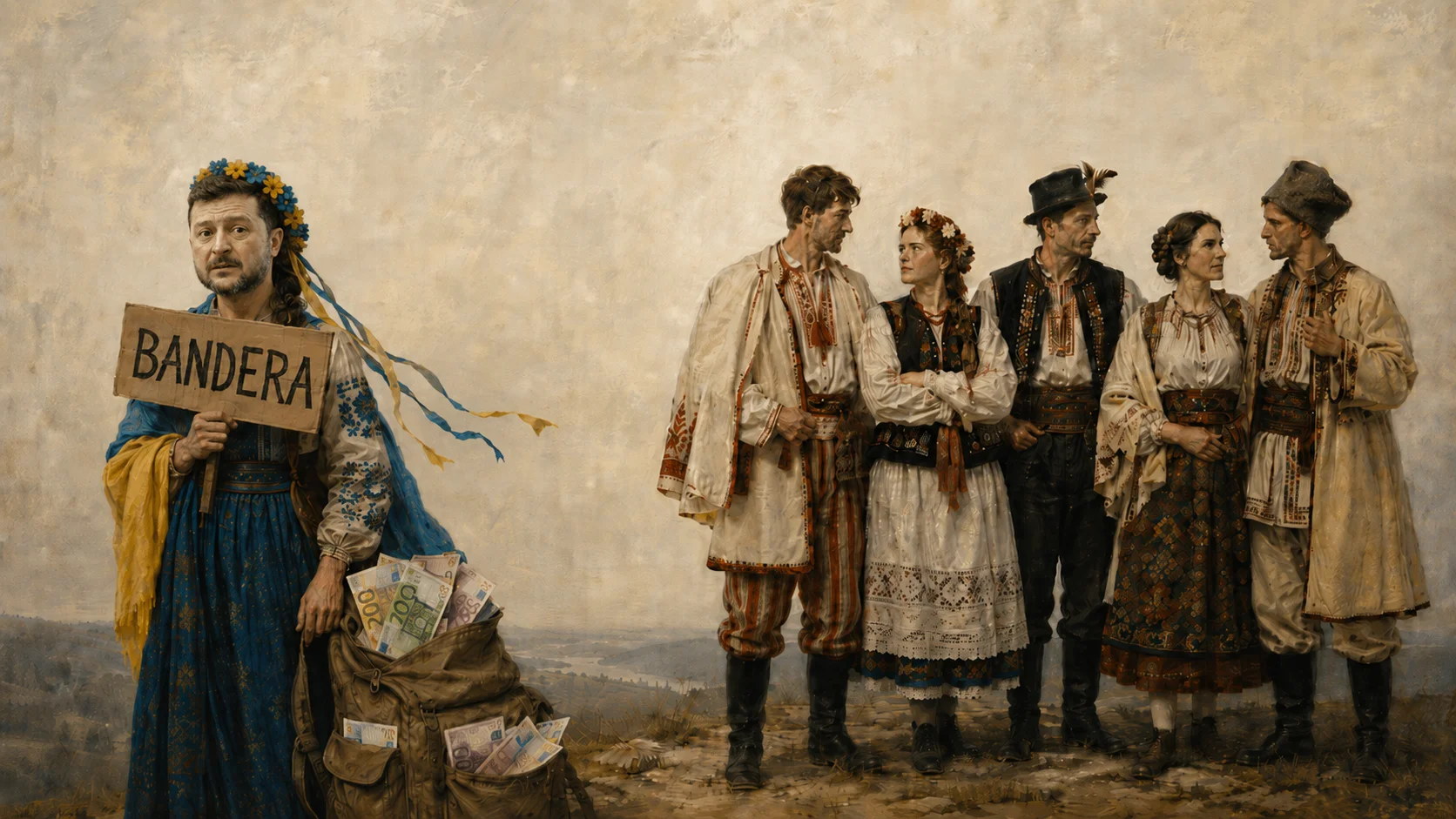
Ukraine’s post-2014 “decommunization” laws and public commemorations elevated OUN and UPA figures, including Stepan Bandera, as national heroes in many western regions.
Bandera’s OUN collaborated with Nazi Germany in 1941 before later clashing with the Germans; the UPA fought both Soviets and Nazis but also committed documented atrocities against Poles and others.
For Poland - one of Ukraine’s strongest military supporters since 2022 - these symbols and the incomplete reckoning with Volhynia remain a source of friction.
Slovakia: Less Blood, But Real Distance - and a Different Path on WWII Memory
Slovakia’s historical relationship with Ukraine is less bloody than Poland’s but still marked by distance.
Cultural and linguistic proximity exists, yet Slovaks have often viewed Ukraine as somewhat alien.
A key contrast lies in how each country handled its WWII past after regaining sovereignty:
- In 1919, during the chaotic aftermath of World War I and the collapse of Austria-Hungary, a Slovak Soviet Republic was proclaimed for only a few months.
- Slovakia had the so called "First Slovak Republic" (1939–1945) under the catholic priest Jozef Tiso - a Nazi-allied puppet state that deported tens of thousands of Jews and implemented anti-Semitic policies. Tiso was tried and executed in 1947.
- However, Slovakia also saw the Slovak National Uprising of 1944, a major anti-fascist revolt against both the Germans and the Tiso regime that received material support and special operations missions from the Western Allies, including the United Kingdom and the United States. Post-1989/1993, official Slovak memory has largely centered on this uprising rather than glorifying the Tiso state.
In contrast, parts of Ukraine’s post-Maidan identity project actively elevated the OUN/UPA tradition as the core of national resistance - including figures with Nazi collaboration ties and responsibility for civilian massacres. Slovakia largely avoided turning its wartime collaborationist leader into a state-sanctioned hero. While fringe revisionist groups do exist in Slovakia (as in many countries), but they do not dominate official policy or education the way Bandera commemorations do in Ukraine.
This difference in historical choices helps explain why Slovakia has not developed the same level of public enthusiasm for Ukraine’s cause as Poland, despite geographic proximity.
Since the invasion in 2022, Slovakia has hosted roughly 130,000–140,000 Ukrainians under temporary protection (a significant number for a country of ~5.4 million). Early solidarity was strong, but it has cooled.
Recent surveys (2024–2025 data) show relatively low support in Slovakia for a Ukrainian military victory compared with Poland or Czechia - around 32% in one regional poll, with higher shares favoring negotiations even if Ukraine concedes territory.
Integration has brought challenges common to large, rapid inflows anywhere:
- Language barriers, qualification mismatches, and temporary contracts are frequently reported.
- Employment rates among working-age Ukrainian refugees in Slovakia are around 60–67% in recent surveys - many contribute in labor-short sectors, but visible groups on benefits or in precarious situations fuel resentment.
- Some locals in cities like Bratislava report problems with alcohol-related incidents, group conflicts, or cultural clashes.
A recurring flashpoint is the open display of Bandera-related symbols or nationalist rhetoric by some refugees or diaspora members. In a country that remembers its own collaborationist past (and the resistance against it), this is often interpreted locally as neo-Nazi or extremist signaling.
Hungary: Cultural Distance, Minorities, and War Fatigue
Hungary has similar minority frictions. There is a Hungarian minority in Ukraine’s Transcarpathia region. Ukraine’s language and education laws have been criticized by Budapest as discriminatory. Viktor Orbán’s government has blocked or delayed some EU aid to Ukraine and maintained warmer ties with Russia.
Historical territorial claims from the early 20th century add to the coolness.
Romania and Moldova: Minority Issues and Border Sensitivities
Romania has historical claims on Northern Bukovina and parts of Bessarabia (now in Ukraine and Moldova). There is a Romanian-speaking minority in Ukraine. Relations are generally better than with Hungary or Slovakia - Romania has been supportive since 2022 - but minority rights disputes and differing views on historical borders create periodic friction.
Moldova shares linguistic and cultural ties with Romania and has its own Russian-backed breakaway region (Transnistria). Ukraine’s position fought Russian influence there, but the war has brought economic strain and security concerns. Historical Soviet-era borders and minority questions add layers of complexity.
The “Odd Member of the Slavic Family” Perception
Many across the Slavic world see Ukraine as something of an outlier.
Post-2014 Ukraine aggressively promoted a distinct Ukrainian identity: language laws prioritizing Ukrainian, decommunization that removed Soviet symbols and elevated controversial nationalists.
After centuries of being treated as a peripheral part of larger empires (Russian, Soviet, Polish, Austro-Hungarian), Ukraine is now asserting sovereignty and reclaiming the claimed "suppressed history".
The 2014 Maidan revolution accelerated this shift.
Ukraine-Russia ties before 2014
Russia was Ukraine's biggest trading partner, and the two economies were deeply intertwined:
Pre-2014: Significant discounted support tied to influence
- Natural gas subsidies/pricing: Russia supplied gas to Ukraine at prices often well below European market rates. This functioned as a de facto subsidy worth billions of dollars cumulatively over the years, depending on the price differential. Deals were renegotiated with disputes, but the below-market pricing helped Ukraine's budget and industry. Russia framed it as "fraternal" help; Ukraine benefited economically.
- 2013 bailout/loan deal: In December 2013 (as Maidan protests grew after Yanukovych rejected the EU deal), Russia offered $15 billion in support: buying Ukrainian Eurobonds (effectively a loan/bailout) + cutting gas prices from ~$400 to $268 per 1,000 m³. Only ~$3 billion was actually transferred before Yanukovych fled in Feb 2014.
- Trade and other preferences: Russia provided preferential access in CIS frameworks. Ukraine earned substantial revenue from transiting Russian gas to Europe (hundreds of millions to ~$1B+ annually in fees at peaks; cumulative billions over years).
- Debt and industrial ties: Russia held/restructured some Ukrainian debt at times and maintained Soviet-era industrial cooperation. Remittances and labor ties existed too.
Who financed Maidan?
The protests began in November 2013 as a largely spontaneous movement after President Viktor Yanukovych (elected in 2010 on a platform including EU ties) suddenly rejected an EU association agreement under Russian pressure.
Crowds included students, liberals, civil society, and later far-right groups like Svoboda and Right Sector.
They turned violent after police cracked down.
Western role/funding:
- US Assistant Secretary of State Victoria Nuland publicly stated in December 2013 that the US had invested over $5 billion in Ukraine since 1991 for democracy-building, institutions, civil society, media, elections, and governance programs (via USAID, NED, etc.).
- George Soros' Open Society Foundations funded various Ukrainian NGOs, media projects, and civil society initiatives over years.
- Leaked calls (e.g., Nuland-Pyatt) showed US diplomats discussing preferred post-Yanukovych leadership (e.g., favoring Arseniy Yatsenyuk) and pushing for a transition.
- EU also provided political and some financial/diplomatic support for the pro-EU path.
Counter-perspective:
- This was framed as Western-orchestrated regime change / coup to pull Ukraine out of Russia's sphere, install a pro-Western government, and weaken Russia. Far-right elements in the protests were highlighted.
What happened to Russian minorities in the east?
Eastern Ukraine (Donetsk, Luhansk/Donbas) had large Russian-speaking populations (many ethnic Russians or mixed identity) who often felt culturally closer to Russia. Russian was widely used in daily life, media, and education pre-2014.
Post-Maidan developments (2014 onward):
- After Yanukovych's ouster, parliament initially moved to repeal a 2012 law giving regional status to Russian (and other languages) in areas where it was widely spoken. This was later blocked/vetoed but created immediate fear and protests in the east.
- New Kyiv authorities promoted Ukrainian language and identity more aggressively (education laws, decommunization). Some Russian-speakers experienced this as discrimination or cultural erasure. Independent monitors (Venice Commission, etc.) criticized aspects of later language/education laws for insufficient minority protections.
- Protests erupted in Donbas against the new government. Russia is rumored to have provided political, financial, and military support to separatists. This escalated into the Donbas war (April 2014–Feb 2022).
Casualties and treatment (pre-2022):
- UN/OHCHR estimates: Roughly 14,000–14,400 total killed from 2014 to early 2022 (civilians ~3,400; Ukrainian forces ~4,400; separatist/Russian-backed forces ~6,500). Tens of thousands wounded. Civilian deaths came from shelling/artillery on both sides of the contact line.
Minsk Agreements and the Failed Peace Track (2014–2022)
After the initial fighting in Donbas erupted in spring 2014, two ceasefire deals were signed:
- Minsk Protocol (Minsk I) - September 2014, after heavy Ukrainian losses.
- Minsk II - February 2015, after even heavier fighting. This was the main one, negotiated in the Normandy Format (Ukraine, Russia, Germany, France) with OSCE involvement and separatist representatives.
Key points of Minsk II (the 13-point package):
- Immediate ceasefire and heavy weapons withdrawal.
- Constitutional reform in Ukraine for decentralization/special status for parts of Donbas.
- Local elections in separatist-held areas under Ukrainian law.
- Amnesty for participants in the conflict.
- Restoration of Ukrainian control over the border with Russia.
- Withdrawal of all foreign armed formations (widely understood to target Russian troops/volunteers).
- Humanitarian measures, prisoner exchanges, etc.
Both sides accused each other of violations from day one. OSCE monitors recorded shelling and ceasefire breaches by Ukrainian forces and by separatist forces. Heavy weapons were not fully withdrawn. Ukraine passed some decentralization laws but resisted full political implementation, arguing it would legitimize the breakaway entities and risk federalization or loss of sovereignty.
The separatists did not return full border control to Ukraine and maintained significant military presence/support. The political track stalled completely.
Germany and France’s role: Angela Merkel and François Hollande were the key Western mediators in the Normandy Format. They pushed hard for Minsk II to stop the killing after Ukrainian forces were losing ground. The deal was signed under intense military pressure on Kyiv.
Later statements from the mediators became controversial:
- In a 2022 interview, Merkel said Minsk gave Ukraine “time” to become stronger militarily.
- Hollande made similar remarks, noting the agreement bought breathing space for Ukraine to rearm and reform its army with Western help.
Ukraine’s Wartime Economy and External Funding Since 2014
Since the 2014 Maidan events and the start of the Donbas conflict, Ukraine’s economy has become heavily dependent on external financing
Pre-2022 (2014–early 2022):
Ukraine received repeated IMF bailout programs (totaling several billion dollars), EU macro-financial assistance, World Bank loans, and bilateral support from the US and others. This helped stabilize the budget after the initial shock of Maidan and the Donbas war. Russia had previously provided discounted gas and a partial $15 billion loan/bailout offer in late 2013. After 2014 that support largely ended.
Since the full-scale invasion (2022 onward):
Ukraine’s state budget has relied heavily on Western aid to cover a large deficit. Direct budget support, loans, grants, and military assistance have kept the government functioning and the war effort going. Key figures (approximate cumulative totals as of early 2026):
- United States: Over $188 billion in total assistance related to the war (roughly $60+ billion in direct military aid, the rest in financial/humane/economic support). This includes direct budget support via mechanisms like the World Bank.
- The Council of the EU says total EU assistance, including military support, proceeds from immobilized Russian assets, and refugee support, amounts to €204.8 billion.
- United Kingdom: Several billion pounds in military and financial aid (exact cumulative figures vary by source but are in the low tens of billions when including all categories).
- Other donors (Canada, Japan, IMF, World Bank, etc.): Additional tens of billions.
This external money has covered a large share of Ukraine’s budget deficit, paid salaries for civil servants and soldiers, imported energy and goods, and funded weapons. Without it, the Ukrainian state would likely have faced collapse. At the same time, it has created deep dependence on Western donors and given them significant influence over Ukrainian policy
Early 2022 peace talks and the role of Boris Johnson
In the first weeks after Russia’s full-scale invasion, there were negotiations between Ukrainian and Russian delegations. Initial discussions reportedly covered Ukrainian neutrality, limits on its military, security guarantees, and territorial issues.
According to Russian accounts and some Ukrainian officials’ later statements, these talks showed some progress in March 2022 but collapsed in April.
British Prime Minister Boris Johnson visited Kyiv in early April 2022 and reportedly told President Zelensky that the West (especially the UK and US) would continue supporting Ukraine militarily if it chose to fight on. Johnson has been accused in Russian narratives of single-handedly “destroying” the peace talks on behalf of the collective West.
Fighting continued and escalated. Russia cites the episode as evidence that the West preferred to weaken Russia through a prolonged proxy conflict rather than allow a quick negotiated settlement.
Newest Developments: Gas Transit and Rhetoric with Hungary
In late 2024 Ukraine announced it would not renew the long-standing agreement for transiting Russian natural gas through its territory. The deal expired on 31 December 2024, and from 1 January 2025 no more Russian pipeline gas flowed across Ukraine to Europe.
The move directly affected Slovakia and Hungary, both of which had continued to receive portions of their gas supplies via the Ukrainian route.
Slovakia, under Prime Minister Robert Fico, and Hungary, under Viktor Orbán, publicly complained about rising energy prices and security risks. Both countries had already shown lower enthusiasm for prolonged military support to Ukraine compared with Poland or the Baltic states.
Relations with Hungary have been especially tense. Orbán has repeatedly blocked or delayed EU financial and military aid packages to Ukraine, citing concerns over the rights of the Hungarian minority in Ukraine’s Transcarpathia region and his preference for negotiated peace with Russia.
In response, Zelensky has directed sharp personal criticism at Orbán, at times using strong rhetoric that Hungarian officials and supporters described as threatening or calls for political removal.
Contested Legitimacy: Elections and Territorial Status
Ukraine has not held national presidential or parliamentary elections since 2022.
Ukrainian authorities describe this as a necessary wartime measure. Critics argue it creates a democratic deficit and questions the current government’s legitimacy after Zelensky’s original term ended in May 2024.
In September 2022 Russia organized referenda in parts of Donetsk, Luhansk, Kherson, and Zaporozhye regions. Russia claims the votes showed overwhelming support for joining the Russian Federation and has formally annexed the four territories. Russia and several of its international partners treat these regions as part of Russia.
Ukraine and the overwhelming majority of UN member states reject the referenda as illegitimate and do not recognize the annexations under international law.
Perspectives
A major line of criticism - shared by Russia, several of Ukraine’s neighbors, and some Western skeptics - holds that the current path of prolonged war is not in Ukraine’s long-term interest.
Without the scale of Western military and financial support since 2022, Ukraine would almost certainly have faced far greater territorial losses earlier but would also have been forced into negotiations sooner, potentially saving tens or hundreds of thousands of lives.
Critics argue that the war is being extended in part because external actors benefit: Western defense industries have secured massive contracts from arms supplies, some EU countries see geopolitical advantages at Ukraine’s expense, and the huge financial aids are inviting corruption, which is now partially documented.
In this reading, Ukrainians are effectively being thrown into a proxy confrontation that serves broader Western aims more than Ukraine’s survival and recovery.
US President Donald Trump has taken a markedly different approach from previous US policy. He has been less supportive of open-ended aid, repeatedly criticized the scale of spending, and stated a clear preference for a negotiated settlement to stop the fighting and the loss of life.
A Complex Picture, Not a Simple Story
Ukraine’s neighbors are not a monolith. Some have provided critical support despite painful memories. Others carry older grudges over massacres, minority treatment, or territorial changes. Ukraine’s post-2014 identity project - built partly on figures and movements with dark chapters - has complicated diplomacy.
For outsiders, the story is rarely as clean as “Ukraine good, Russia bad.”
It is a web of legitimate grievances on multiple sides, competing national myths, and the harsh practicalities of war and displacement. Understanding that web helps explain why even geographic neighbors often keep Ukraine at arm’s length.
You might also like