France to Solve Its Debt Crisis by Taxing the Internet Per GB
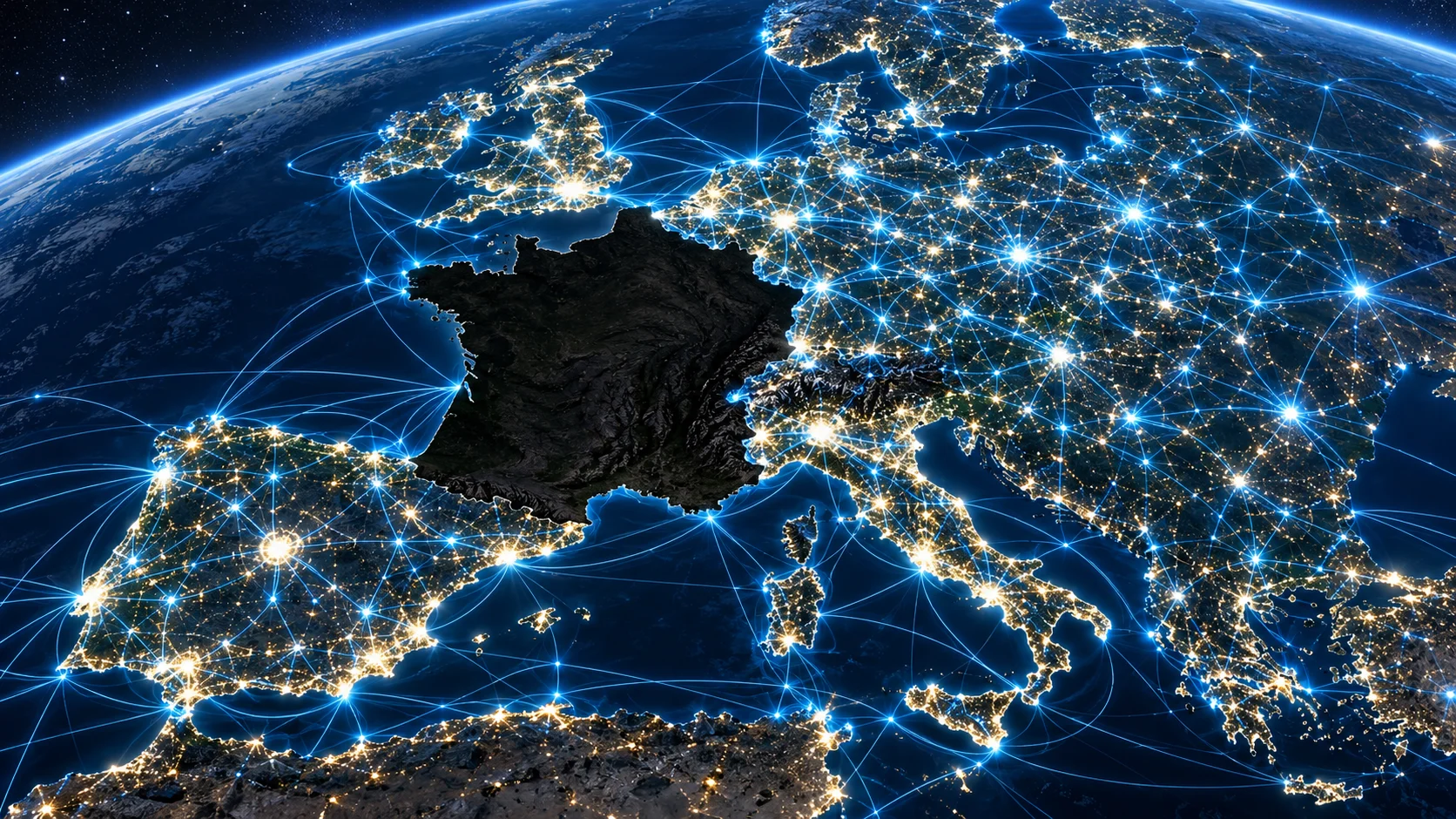
PARIS - Eleven deputies, a clear 1.9% of the National Assembly, voted on Friday to bill the internet by weight.
The tax would fall on "producers of digital data", meaning Google, Meta, Amazon, Netflix, Akamai and anyone else who sends a gigabyte to a French subscriber.
Those subscribers already pay for the connection, and the fibre was built with billions in public money.
The platforms are expected to absorb the cost out of civic duty.
The authors hope for €10 billion a year.
France plans to issue a record €340 billion in bonds in 2027, so the tax would cover about eleven days of that. Against the €2 trillion rescue Bob Lyddon has proposed, it would need 200 years. Against the full debt, about 360.
Assuming nobody spends anything in the meantime.
Who pays? YOU.
A 100 GB game would carry €5.50, and five hours of idle YouTube music streaming a day could reach €25 a month. Viewers can reduce this by watching in 144p, which we understand is the sobriety part.
A volume tax hits whoever moves a lot of bytes on thin margins, and that has little to do with who's actually making money.
Big platforms are the best placed to survive. Higher subscriptions, more ads or lower quality for France are all available tools.
Small companies have no such cushion. Software downloads, cloud storage, remote work and updates all become metered costs. They can raise prices, host abroad and stop serving France.
Which of those helps the French budget?
Advertising - Nobody ordered that pre-roll, but the Republic will still be weighing it. Sites earn less per ad, show more ads, send more bytes and owe more tax.
Social Media - You pay nothing to scroll. Two hours of autoplay reels a day is up to about €5 a month in tax, most of it on videos you never picked. The platform can't charge you for that, so it does what it always does: more ads.
The real change would be reach.
A 30 MB clip watched a million times in France is 30 TB, or €1,650 in tax. Suddenly every view has a price, and going viral has a cost. Expect reach to go to whoever pays for it, or whoever the platform doesn't mind paying for. Your opinion stays perfectly free. Sending it to anyone is another matter.
Abuse. The sender pays for traffic it didn't request. Anyone with enough French connections could repeatedly download a rival's largest files and run up the rival's tax bill.
Servers and Hosting - Hosting companies sell bandwidth as nearly free, and that business model doesn't survive a tax of this size. Hosts would have to meter everyone and the small customer who has become a tax headache is the first one to be cancelled.
Free software and Software Updates - A 4 GB Linux image costs 22 centimes per download, for a project that gives it away for free.
Every download would now have a price. Expect accounts, micro transactions and the absolute end of anonymity because that one download costs you 0.77 and has been logged.
For a small foreign site, the cheapest answer is to block France. Some US news sites did exactly that to Europe after GDPR. Multiply that by every hobby forum, indie tool and free project, and you have a very French kind of sovereignty.
And let nobody imagine they can escape by logging off and picking up a book.
The tax per printed word is surely next. At 5.5 centimes per thousand words, a 100,000-word novel comes to €5.50, the same as a 100 GB game.
The French Senate is expected to bin it.
Still, we refuse to be pessimistic. An idea this good should not stop at the French border.
Isn't that what the Union was built for?
Fortunately, an EU-wide tax needs every member state to agree and abolishing unanimity requires unanimity.
Unfortunately, that one is already in the works.
Das könnte dich auch interessieren