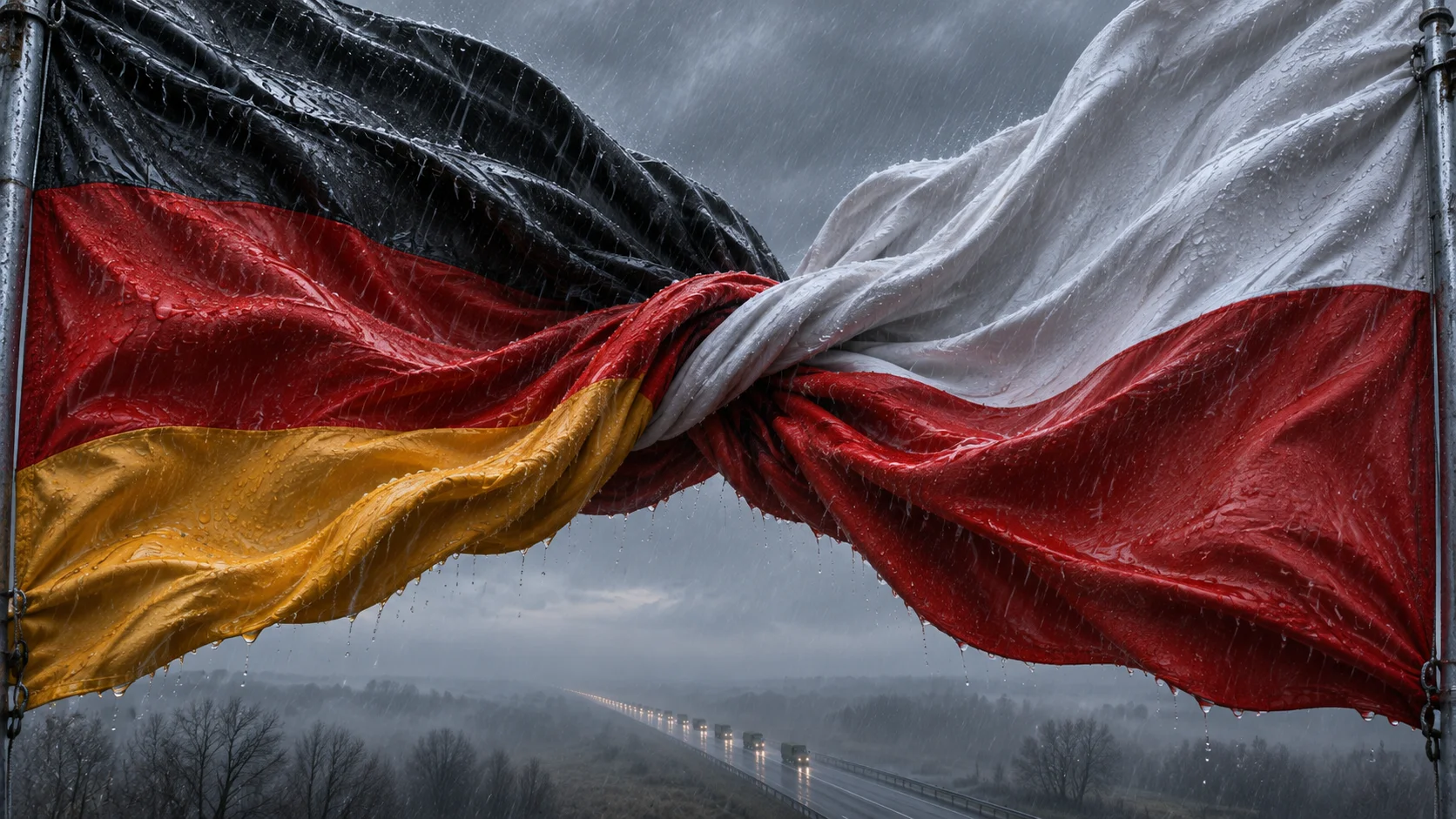
One Union, Two Rulebooks

The EU's Stability and Growth Pact is simple - a budget deficit of no more than 3% of GDP, public debt of no more than 60%. Break it, and Brussels opens an "excessive deficit procedure": savings plans, deadlines, supervision.
But the EU also likes to break its own rules.
Rule break one: the escape clause
On 18 March 2025 the old Bundestag – already voted out on 23 February – changed the German constitution, 513 votes to 207. Defence spending above 1% of GDP is now permanently exempt from the German debt brake, with no upper limit.
The vote was held a week before the new parliament met, in which AfD and Die Linke together would have had enough seats to block it. The Bundesrat followed on 21 March.
Ten days later, Brussels presented its escape clause: up to 1.5% of GDP of extra spending per year for four years, outside the EU's fiscal rules. Not for pensions. Not for hospitals. Not for farmers. For weapons only.
Eighteen (of 27) countries took it: Belgium, Bulgaria, Croatia, Czechia, Denmark, Estonia, Finland, Greece, Hungary, Latvia, Lithuania, Poland, Portugal, Slovakia and Slovenia in July 2025, Germany in October 2025, Austria in February 2026, Spain in June 2026.
Result: a German defence budget of about €108 billion in 2026, almost €140 billion planned for 2027, and around €152–163 billion by 2029. The Brussels think tank Bruegel noted that the German reform "appears to ignore the main provision of EU fiscal rules".
The President of the European Commission is Ursula von der Leyen.
From 2013 to 2019 she was Germany's defence minister. Coincidence?
Rule break two: SAFE
SAFE – "Security Action for Europe" – lets the Commission borrow up to €150 billion on the financial markets in the name of the whole EU and lend it on to member states for weapons. Common EU debt, for arms.
How was it passed? Not through the European Parliament.
On 27 May 2025 the Council – the governments – adopted SAFE under Article 122 of the EU Treaty.
Article 122 is the emergency article, written for crises such as a sudden shortage of energy.
It has one useful feature: the Parliament has no vote.
Defence industrial policy would normally fall under Article 173 – the ordinary procedure, with the Parliament deciding together with the Council. The Commission chose 122 and insisted it was "the sole and appropriate legal basis".
The European Parliament – the only EU institution anyone actually votes for – sued the Council at the EU Court of Justice to have SAFE annulled (case C-560/25). There is no ruling yet, but the money flows anyway: Poland received its first €6.6 billion on 29 May 2026.
Who pays if it goes wrong?
Each borrowing country repays its own loan – 45 years, the first ten without repaying anything. As long as it can.
But the €150 billion is borrowed by the EU, not by Warsaw or Bucharest. It is backed by the "headroom" of the EU budget, and behind that headroom stand all 27 member states as guarantors.
If a borrower cannot pay – for whatever reason, a war included – the Commission can demand extra payments from the member states, above the normal budget ceilings.
The Dutch government calculated its own maximum exposure for that headroom: €15.3 billion. The Netherlands did not take a single euro of SAFE.
Who gains?
The rules say at least 65% of the value must come from the EU, the EEA or Ukraine.
This "European preference" was France's idea; the Commission had wanted 50%.
It keeps American, British and Korean manufacturers out. The British were asked for an entry fee of more than €6 billion; the talks failed.
Most SAFE money stays with the borrowers' own industry – Poland, the biggest borrower with €43.7 billion, spends 89% at home.
Of what crosses borders, German manufacturers collect the most:
Romania signed €5.7 billion with Rheinmetall on 29 May 2026 – 298 Lynx infantry fighting vehicles, Skyranger air defence, ammunition and two patrol ships. Rheinmetall calls it the largest international contract package in its history.
Portugal buys Boxer vehicles from Rheinmetall and KNDS.
Bulgaria buys IRIS-T SLM air defence from the German Diehl.
Croatia buys German Leopard 2A8 tanks.
France collects too, with Caesar howitzers for Lithuania and Croatia. Italy's Fincantieri and Leonardo build frigates for Portugal for €3.9 billion. Sweden sells CV90 vehicles to Estonia and Lithuania.
And then there is Ukraine.
Ukraine is not a member of the European Union. It is not in the EEA.
It pays nothing into the EU budget and guarantees nothing.
Under SAFE it cannot borrow a single euro – but it does not need to.
In the "European preference" that keeps American, British and Korean manufacturers out, Ukrainian arms makers count as European. Every Ukrainian component counts towards the 65% exactly like a German, French or Polish one, and EU countries can buy from Ukraine's defence industry with SAFE money.
It does not stop there. The second SAFE round, €21.3 billion, opened on 29 October 2026, is meant explicitly for joint projects with Ukraine. Money borrowed in the name of 27 EU countries, guaranteed by all of them – going to the industry of a country that is not one of them.
When did the EU's member states decide that Ukraine is European enough to collect, but not member enough to be liable?
The EU Commission is led by a former German defence minister with a huge heart for Volodymyr Zelensky.
She switched off the rules, kept the Parliament out and borrowed €150 billion in your name. The orders went to Germany. The partner is Ukraine. The guarantee is you.
Nobody voted for this. Nobody will be asked when it has to be paid back.
Sources
- consilium.europa.eu
- aa.com.tr
- constitutionnet.org
- think.ing.com
- chronicle.lu
- consilium.europa.eu
- consilium.europa.eu
- consilium.europa.eu
- pap.pl
- consilium.europa.eu
- consilium.europa.eu
- dsei-gateway.com
- defencefinancemonitor.com
- bruegel.org
- euperspectives.eu
- bundesregierung.de
- consilium.europa.eu
- verfassungsblog.de
- pubaffairsbruxelles.eu
- socialistsanddemocrats.eu
- unn.ua
- poland.representation.ec.europa.eu
- europarl.europa.eu
- eerstekamer.nl
- ft.dk
- cer.eu
- caliber.az
- breakingdefense.com
- rheinmetall.com
- milmag.pl
- grosswald.org
- kam.lt
- breakingdefense.com
- brusselstimes.com
- mod.gov.ua
- english.nv.ua
You might also like