The "Cypriot issue"
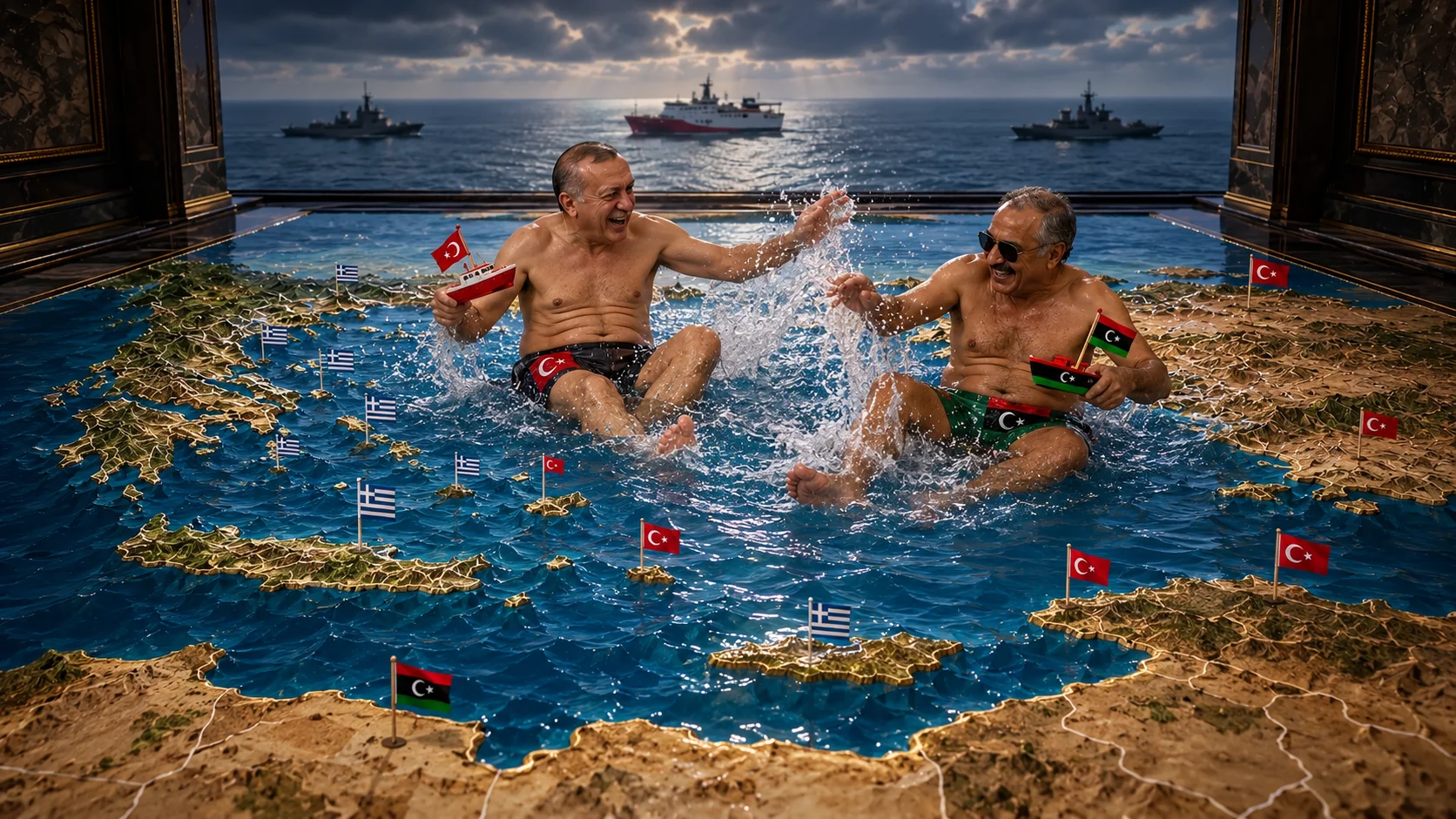
Turkey invaded Cyprus in 1974 and still occupies roughly 36 percent of the island, maintains tens of thousands of troops, supports an administration recognised by no country except Turkey itself and has helped transform the population of the occupied territory through decades of settlement from Anatolia.
Greek Cypriots were driven from their homes, stripped of their property, and the internationally recognised Republic of Cyprus still cannot exercise authority over more than a third of its own territory.
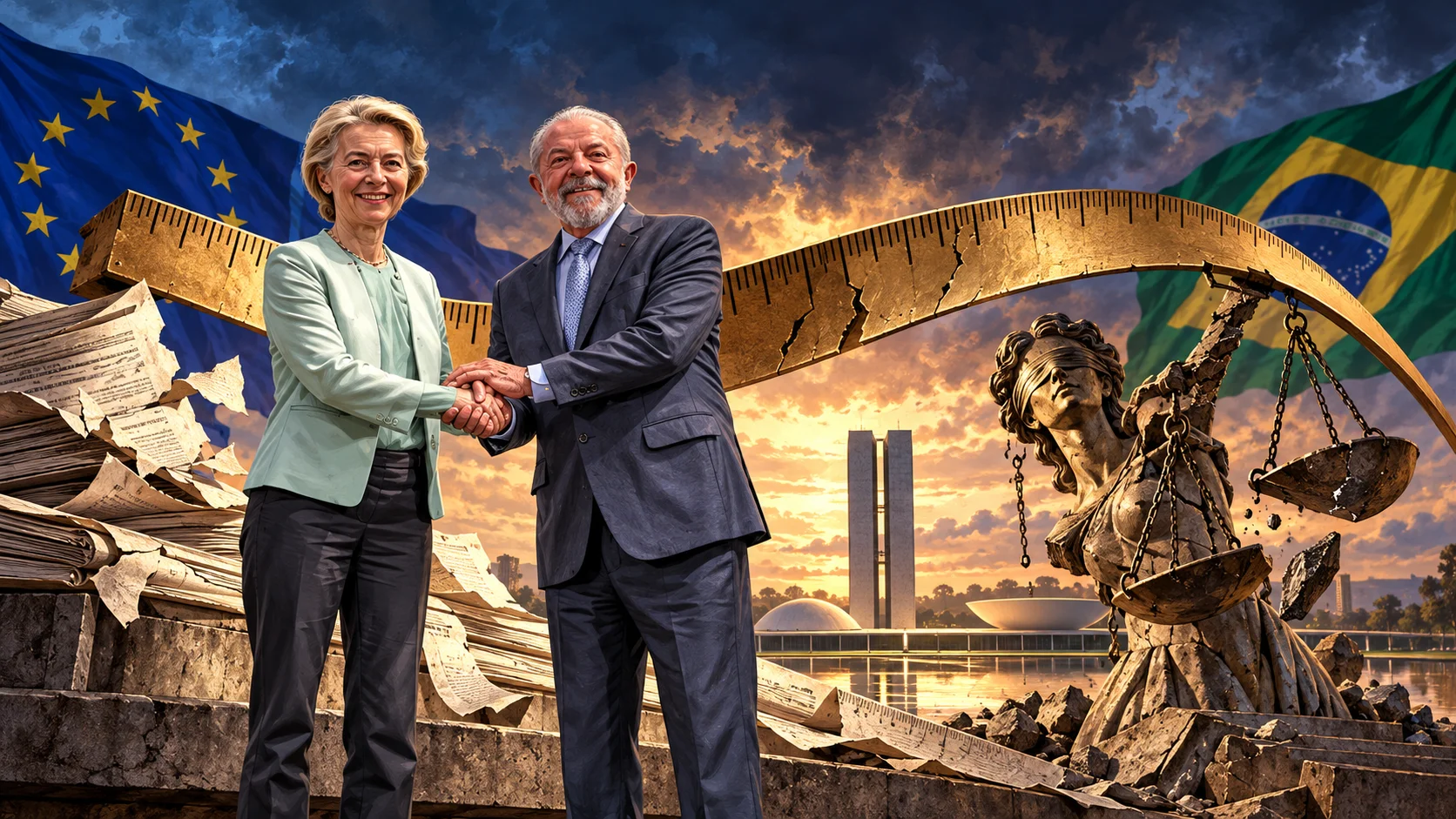
In Brussels, however, this has undergone a remarkable linguistic reform. It is no longer an invasion followed by half a century of military occupation. It is “the Cyprus issue” now, so let's take a look at what really happened.
For those who don't wanna read that much, here the ending:
There is no mysterious Cyprus issue. There is one European country, two native communities and one foreign army that has remained on the island since 1974.
Cyprus must be reunited, Turkish Cypriots must be protected, and Turkey must leave.
~~~
Historical lesson
(You are free to skip this part to 1974, if not interested)
How Cyprus became Greek-speaking
Cyprus had inhabitants and developed societies long before Greeks arrived.
During the late Bronze Age, beginning roughly in the fourteenth century BCE and intensifying after the collapse of the Mycenaean palace world around 1200 BCE, substantial numbers of Mycenaean or Achaean Greeks settled on the island.
They mixed with the existing population, Greek language and culture gradually became dominant, although indigenous Cypriot and Phoenician communities remained important.
By the first millennium BCE, Cyprus was firmly part of the wider Greek cultural world. Its kingdoms used Greek language, worshipped Greek gods and participated in Hellenic culture, while maintaining distinctive Cypriot institutions and artistic traditions.
It later passed through Persian, Macedonian, Ptolemaic and Roman rule.
Cyprus therefore became Greek culturally without normally being governed from mainland Greece.
Under the Eastern Roman, or Byzantine, Empire, Greek language and Orthodox Christianity became even more deeply established. That Byzantine period is central to Greek Cypriot identity because it linked the island not merely to ancient Greek culture but to the medieval Greek-speaking Orthodox world.
Cyprus was subsequently ruled by the Lusignans, Venetians, Ottomans and British.
The Ottoman conquest in 1571 produced the community that became the Turkish Cypriots, although their ancestry also includes converts and earlier inhabitants rather than simply settlers shipped intact from Anatolia. Greek and Turkish Cypriots lived for centuries in the same towns and sometimes in mixed villages, while retaining different religions, languages and communal institutions.
Why Cyprus did not join Greece (unlike Crete)
Modern Greece became independent during the nineteenth century.
Cyprus had been administered by Britain since 1878 and formally became a British colony in 1925.
Most Greek Cypriots saw themselves as part of the Greek nation and wanted enosis, union with Greece, following earlier examples such as Crete, the Ionian Islands and the Dodecanese.
The demand combined ethnic nationalism, anti-colonialism, the political authority of the Orthodox Church and the principle of national self-determination.
In January 1950, the Church of Cyprus organised an unofficial enosis plebiscite after Britain refused to hold an official referendum.
The recorded result was 215,108 for union and 9,639 against, (95.7 percent).
Turkish Cypriots, approximately 18 percent of the population by independence, generally mostly opposed enosis because it would have transformed them from a constitutionally recognised Cypriot community into a small minority inside Greece.
Their counter-position gradually became taksim, partition, especially once enosis began to be pursued through armed violence. The Turkish Cypriot leadership therefore did not regard enosis as harmless family reunification among Greeks. It looked more like the possible disappearance of Turkish Cypriot political autonomy.
The Greek government initially tried to internationalise the issue rather than invade Cyprus. Under Prime Minister Alexandros Papagos, Greece placed Cypriot self-determination before the United Nations in 1954, against strong British and American objections.
Britain resisted because Cyprus was strategically important for military operations in the eastern Mediterranean and Middle East. Diplomatic efforts produced no route to union, so the movement’s harder wing moved towards insurgency. Thus arrived the familiar human method of resolving a failed constitutional argument: explosives.
EOKA and the armed attempt, 1955–1959
The principal military organiser was Georgios Grivas, a Cyprus-born retired Greek Army colonel using the name Digenis. Grivas secretly returned to Cyprus and created EOKA, the National Organisation of Cypriot Fighters. Archbishop Makarios III, elected Archbishop of Cyprus in 1950, was the movement’s principal political and religious leader, although the exact extent of his control over individual EOKA operations remains debated.
EOKA began its campaign on 1 April 1955 with coordinated bomb attacks against British government, military and broadcasting installations. Its declared objective was not merely independence but the end of British rule followed by enosis. It used sabotage, assassinations, ambushes, bombs, strikes and an underground cell structure. Britain responded with emergency rule, mass detention, executions, curfews, intelligence operations and military sweeps. Makarios was deported to the Seychelles in 1956, while Grivas remained hidden on the island.
The casualty figures are often mangled because some memorial totals include British personnel who died from accidents, illness and other non-combat causes. A detailed Oxford study drawing upon British colonial records attributes to EOKA the deaths of approximately 104 British military personnel, 51 police officers and 238 civilians. Of those civilians, approximately 203 were Greek Cypriots.
In 1955, the Turkish Cypriot population on Cyprus was approximately 18 percent.
As a reaction, Britain increasingly employed Turkish Cypriots in the colonial police, partly because EOKA had intimidated many Greek Cypriot officers. EOKA then targeted Turkish Cypriot policemen, while Turkish Cypriot nationalists formed their own armed networks. Intercommunal killings escalated sharply in 1958.
The most important Turkish Cypriot organisation was TMT, the Turkish Resistance Organisation. Its central figures included Turkish Cypriot politicians Dr Fazıl Küçük and Rauf Denktaş, together with Turkish Army officer Rıza Vuruşkan. TMT was supported and organised with assistance from Ankara and promoted taksim rather than a unitary Greek-dominated Cyprus. It also intimidated and killed Turkish Cypriots who favoured cooperation with Greek Cypriots or opposed its authority.
The 1960 compromise
The Zürich and London agreements created the independent Republic of Cyprus in 1960.
Makarios became president and Fazıl Küçük became vice-president. The constitution established communal quotas, separate majorities for certain laws, Turkish Cypriot veto powers and separate Greek and Turkish communal institutions.
The associated Treaty of Guarantee committed Cyprus, Greece, Turkey and Britain to preserve the island’s independence, territorial integrity and constitutional order. It expressly prohibited both enosis and partition. Greece was permitted to station 950 soldiers in Cyprus, Turkey 650, while Britain retained its sovereign bases.
The 1963 constitutional breakdown and deaths
By 1963, President Makarios considered the constitution unworkable. He proposed thirteen amendments that would have reduced several Turkish Cypriot vetoes and separate communal arrangements. Turkish Cypriot leaders rejected them, of course.
Running parallel to this was the secret Akritas organisation and plan, generally associated with Interior Minister Polycarpos Georkadjis, whose underground name was Akritas, and a circle of senior Greek Cypriot politicians that included Tassos Papadopoulos. The document envisaged rapidly overcoming Turkish Cypriot resistance, changing the constitutional structure and reopening the route to self-determination and eventually enosis.
The power-sharing republic effectively collapsed. Turkish Cypriot officials ceased participating in central government, whether through exclusion, intimidation, withdrawal or some combination depending upon the particular institution and interpretation. Turkish Cypriot enclaves developed their own administration under Küçük and Denktaş. The United Nations deployed UNFICYP in March 1964 to prevent renewed fighting.
Grivas returns and enosis turns against Makarios
After independence, Makarios gradually moved away from immediate enosis. He concluded that an independent Cyprus under Greek Cypriot leadership was safer and more realistic than provoking war with Turkey.
For uncompromising enosists, this made him a traitor to the cause he had once led.
Grivas secretly returned to Cyprus in 1971 and formed EOKA B.
Unlike the original EOKA, which had fought British colonial rule, EOKA B attacked the independent Cypriot state, Makarios supporters, police officers, leftists and other Greek Cypriots. Its purpose was to force enosis and remove Makarios.
Meanwhile Greece had been governed by a military dictatorship since 1967.
After an internal coup in Athens in November 1973, real power passed to military-police chief Dimitrios Ioannidis. Greece’s formal president was General Phaedon Gizikis, and its nominal prime minister was Adamantios Androutsopoulos, but Ioannidis was the regime’s decisive figure.
Grivas died in January 1974. American intelligence reporting stated that Ioannidis subsequently sought control of EOKA B through the Cypriot National Guard, whose command structure contained numerous officers seconded from the Greek Army. Ioannidis regarded Makarios as unreliable, excessively independent and dangerously accommodating towards the Soviet bloc and the Cypriot left.
On 2 July 1974, Makarios publicly demanded that Athens withdraw hundreds of Greek officers from the National Guard, accusing the Greek regime of directing EOKA B. That demand effectively forced the confrontation.
The Greek-backed coup of 15 July 1974
The coup was ordered from Athens by Ioannidis and executed by units of the Cypriot National Guard under Greek officers.
Tanks and infantry attacked the presidential palace while Makarios was receiving a group of schoolchildren.
The building burned, but Makarios escaped through the rear, reached Paphos and was evacuated by the British through RAF Akrotiri.
The junta installed Nikos Sampson as the new president. Sampson was a former EOKA gunman, newspaper publisher and militant enosist associated with violence against Turkish Cypriots in the 1960s. Makarios loyalists, members of his Special Reserve police, leftists and suspected opponents of EOKA B were arrested or killed.
Turkey considered the coup an attempted enosis carried out by Greek officers and therefore a direct breach of the 1960 treaties.
The Turkish government was headed by Prime Minister Bülent Ecevit, with Islamist leader Necmettin Erbakan serving as deputy prime minister in the coalition.
Ecevit travelled to London and sought joint action with Britain under the Treaty of Guarantee. Britain declined to participate militarily. Turkey then chose unilateral intervention, relying on Article IV of the treaty, which permitted guarantor action aimed at restoring the constitutional order when joint measures proved impossible. Whether that clause permitted a full military invasion under the UN Charter was disputed even at the time. What it certainly did not authorise in plain language was permanent partition or annexation.
The first Turkish offensive
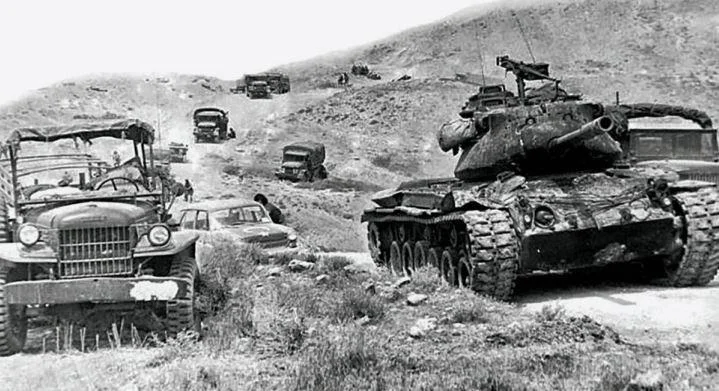
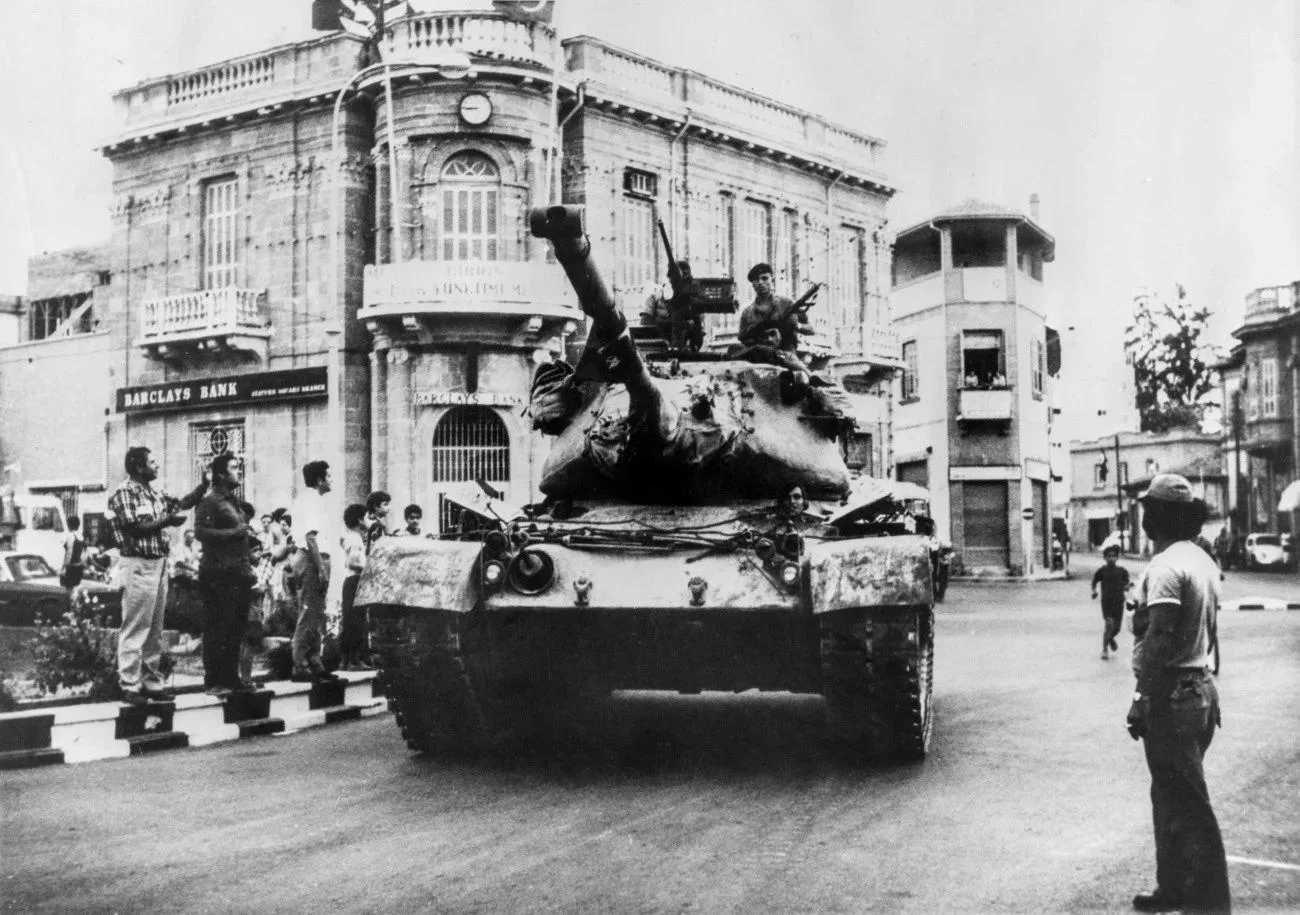
At dawn on 20 July 1974, Turkish forces launched amphibious landings near Kyrenia, dropped paratroopers north of Nicosia and bombed Cypriot National Guard positions, including Nicosia airport.
Turkey eventually deployed approximately 40,000 troops, supported by roughly 160 to 180 tanks, artillery, aircraft and naval forces. Against them stood approximately 12,000 active Cypriot National Guard personnel, expanded through a chaotic mobilisation, plus approximately 1,800 to 2,000 mainland Greek troops.
The Turkish force therefore possessed overwhelming air power, armour, naval support and logistical superiority.
A ceasefire formally began on 22 July, by which time Turkish forces had secured a narrow Kyrenia beachhead and corridor towards the Turkish Cypriot sector of Nicosia, amounting to only a small portion of the island.
The invasion caused the Greek dictatorship to collapse.
Ioannidis lost power on 23 July, civilian government returned to Greece under Konstantinos Karamanlis, Sampson resigned, and Glafcos Clerides, as president of the Cypriot House of Representatives, became acting president. Thus the Greek-backed coup and immediate threat of enosis had effectively ended within days.
So far, so good.
The second Turkish offensive
Representatives of Greece, Turkey and Britain signed the Geneva Declaration on 30 July and entered further negotiations. Turkey used the interval to reinforce its forces heavily.
Turkey then launched Attila II, its second and much larger offensive. Turkish forces captured Famagusta, Morphou, much of the Mesaoria plain and northern Nicosia, extending control to approximately 36 percent of Cyprus. A UN report recorded that the second operation resulted in the occupation of most of northern Cyprus from Xeros to Famagusta.
This second phase is crucial when judging Turkey’s justification.
By 14 August, the Athens junta had fallen, Sampson had resigned, enosis was no longer being implemented and constitutional Cypriot authorities had been restored under Clerides pending Makarios’s return.
Turkey nevertheless expanded its territory from a limited bridgehead to more than one-third of Cyprus. That makes the argument that the operation remained confined to “restoring constitutional order” extremely difficult to sustain.
On 15 August, Turkish armoured forces continued east and west. The National Guard began a broad retreat rather than allow units to be surrounded.
By the morning of 16 August, the Cypriot authorities had told the UN that their forces were withdrawing from territory being taken by the Turkish army and would fire only in self-defence.
Turkish troops captured Morphou, much of the Mesaoria plain, the northern section of Nicosia and the land stretching from the north-western coast to Famagusta. They also advanced close to UN positions, shelled areas around the UN’s Kykko Camp and wounded several peacekeepers. Turkish aircraft attacked retreating National Guard forces near UN facilities.
Turkey declared a ceasefire on the evening of 16 August.
By then its army controlled approximately 36 to 40 percent of Cyprus.
The UN Secretary-General described Turkish forces as occupying most of northern Cyprus from Xeros to Famagusta.
The Security Council adopted Resolution 360 that same day, formally disapproving the unilateral military actions undertaken against the Republic of Cyprus and warning that territorial advantages acquired through military operations must not determine the outcome of negotiations.
Turkey kept the territorial advantages anyway. The United Nations had issued a strongly worded document, so institutional equilibrium was restored.
Consequences of 1974
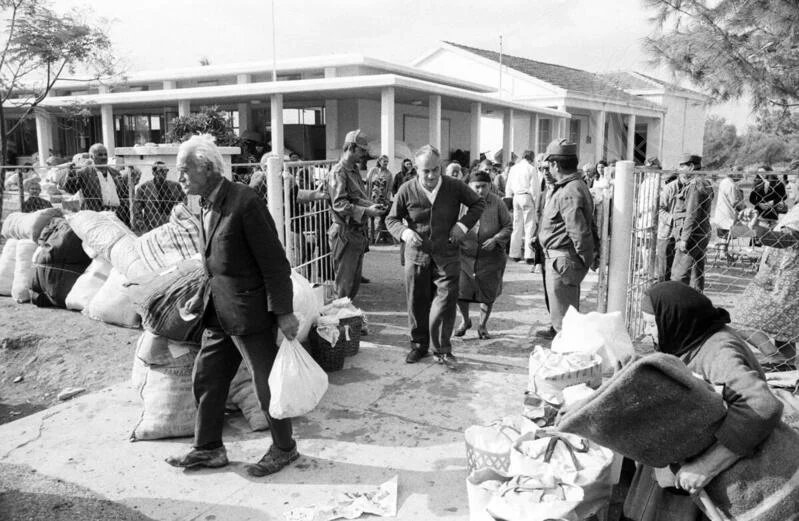
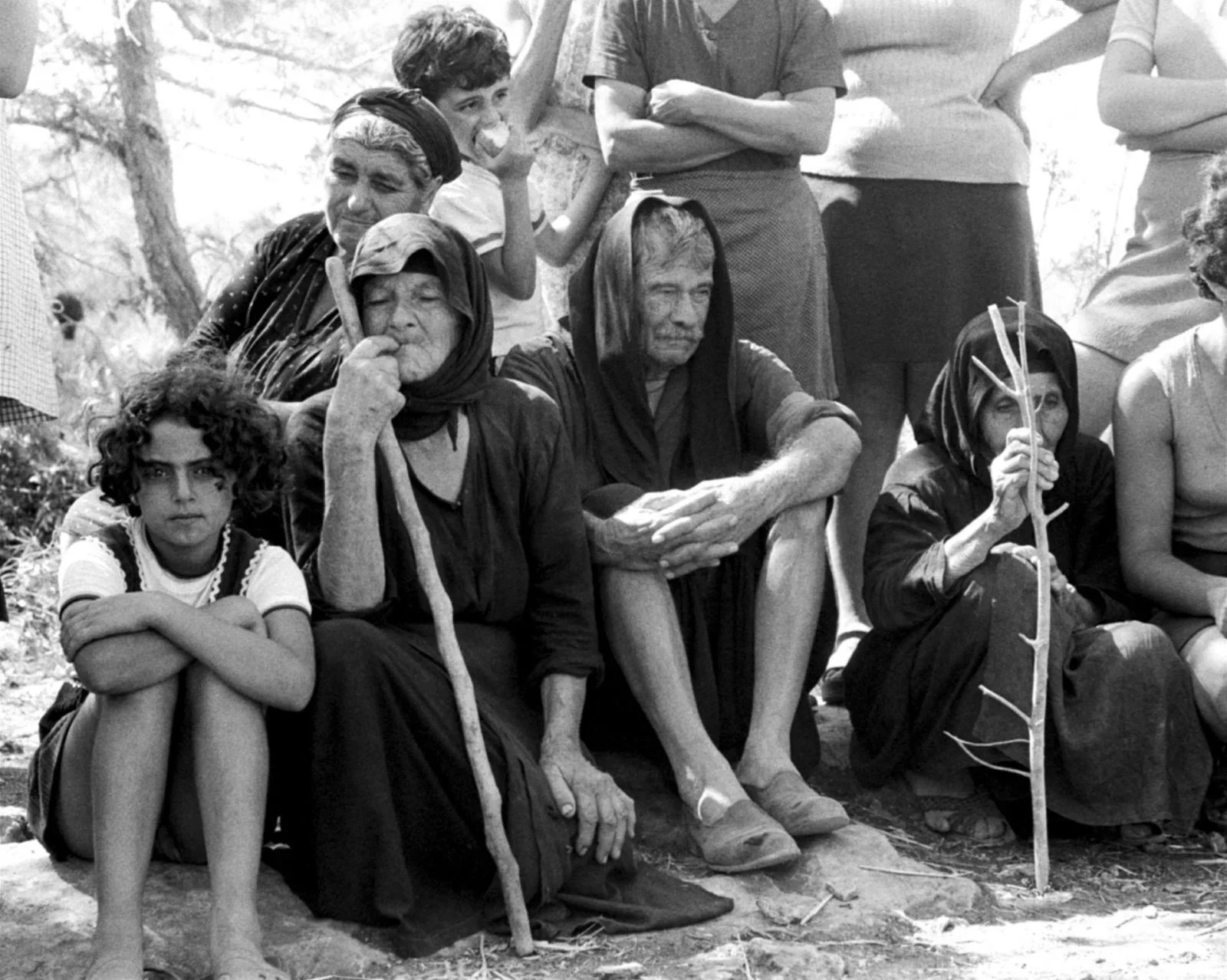
The advance caused a mass flight south. By 1 September 1974, Greek-Cypriot authorities were reporting 203,600 displaced people. The UN concluded that approximately one-third of the island’s entire population had been uprooted or otherwise left in need.
Greek Cypriots who remained behind faced detention, insecurity and restrictions on movement.
The UN reported widespread looting in the aftermath of the fighting, complaints concerning rape and violence. UN investigations were repeatedly obstructed by restrictions imposed by Turkey.
At the end of 1974, the UN reported that approximately 3,000 people were being described as missing.
The remaining unresolved cases became one of the permanent human consequences of the occupation.
The European Court of Human Rights later found Turkey responsible for failing to conduct an effective
investigation into Greek Cypriots last seen in areas or custody under Turkish control. It did not rule that every missing person had been executed by Turkish forces, but it found that Turkey could not simply maintain control of the territory and then claim to know nothing about people who vanished inside it.
By December 1974, approximately 2,500 Greek Cypriots were living in poor conditions in areas where they had been concentrated. In November, 1,123 people were evacuated from Voni and Gypsos to the south following an agreement between Clerides and Rauf Denktaş.
At the same time, Turkish Cypriots living in the south increasingly moved north. The UN recorded that several thousand had moved independently by late 1974, while approximately 96 percent of released Turkish-Cypriot detainees chose to relocate north. The result was not merely a complete ethnic separation of communities that had previously lived throughout the island.
What came afterwards
The ceasefire positions became the basis of the present Green Line and UN buffer zone. The United Nations monitored the line but had neither the authority nor the military capacity to force Turkey to withdraw.
In November 1974, the UN General Assembly unanimously called for the speedy withdrawal of all foreign forces and the urgent return of refugees to their homes. Turkey voted for the resolution and then declined to carry out the parts involving withdrawal or refugees, an early example of international consensus being treated as an interesting literary genre.
In February 1975, the Turkish-Cypriot leadership proclaimed the Turkish Federated State of Cyprus within the occupied territory. The Security Council regretted the unilateral act and called for respect for the sovereignty and territorial integrity of the Republic.
In 1983, the same administration declared the “Turkish Republic of Northern Cyprus,” whose attempted secession the Security Council deemed legally invalid. It remains recognised only by Turkey.
From 1985 onward, the military front barely moved.
1985–1992: repeated attempts to design a federation
In January 1985, President Spyros Kyprianou and Turkish-Cypriot leader Rauf Denktaş met in New York under UN Secretary-General Javier Pérez de Cuéllar. The meeting failed. A revised UN framework followed in 1986, proposing an independent, bicommunal and bizonal federation, but the parties remained divided over Turkish troops, settlers, constitutional power, territory, guarantees, property and freedom of movement.
Negotiations resumed after George Vassiliou became president in 1988.
In 1990, Security Council Resolution 649 consolidated the formula that still dominates international diplomacy: not partition, not enosis, but a bizonal, bicommunal federation with political equality.
Boutros Boutros-Ghali subsequently presented his 1992 “Set of Ideas,” including territorial adjustments, federal institutions and security arrangements. It also failed. The country remained divided.
The 1990s: Cyprus moves towards Europe
The Republic of Cyprus applied to join the European Communities in 1990. Its accession negotiations began in 1998, and the 1999 Helsinki European Council decided that a political settlement would not be a precondition for membership.
Turkey could therefore no longer prevent Cyprus from joining Europe simply by preventing reunification.
At the same time, Greek-Cypriot refugees began winning important cases against Turkey.
In Loizidou v. Turkey, the European Court of Human Rights held Turkey responsible for denying Titina Loizidou access to her property in Kyrenia because Turkey exercised effective control over northern Cyprus.
In Cyprus v. Turkey in 2001, the Court found continuing violations involving missing persons, displaced Greek Cypriots, property and the remaining enclaved population in the Karpas.
These judgments did not restore the properties. They did establish something Brussels now occasionally misplaces beneath several layers of stakeholder language: responsibility did not end at the Green Line merely because Turkey had installed local institutions to administer the territory.
2002–2004: the Annan Plan
The largest settlement attempt was the Annan Plan, developed under UN Secretary-General Kofi Annan.
It proposed a reunited federal Cyprus composed of two constituent states, with detailed provisions for territory, property, government, security, citizenship and the gradual reduction of foreign forces.
The plan was submitted to separate referendums on 24 April 2004. Turkish-Cypriot voters approved it by 64.91 percent, while Greek-Cypriot voters rejected it by 75.83 percent.
This is often compressed into the claim that Turkish Cypriots chose peace while Greek Cypriots rejected it, which is wrong.
The actual Greek-Cypriot objections included continuing Turkish military rights, inadequate guarantees that Turkey would implement troop withdrawals, treatment of settlers, restrictions on return and property recovery, and fears that the proposed federal institutions would be unworkable.
President Tassos Papadopoulos also objected that Turkish intervention rights and a residual military presence would survive inside the new arrangement.
The plan therefore failed, but Cyprus entered the European Union one week later, on 1 May 2004.
Legally, the entire Republic entered the EU.
EU law was suspended in the northern territory because the lawful government could not exercise effective control there. The Green Line was regulated as an internal special regime, not recognised as an international frontier.
Thus the EU acquired a member state whose territory was partly controlled by an EU candidate country.
Crossings open, but the occupation remains
In April 2003, before the referendum, the Turkish-Cypriot administration unexpectedly eased restrictions on movement across the Green Line. Greek and Turkish Cypriots could visit the other side in large numbers for the first time in almost thirty years.
The Ledra Street crossing opened in central Nicosia in April 2008. Families could visit former homes, workers could cross for employment and commercial contact increased. These changes made daily life less abnormal, but they did not restore property, remove troops or reunify the state.
2008–2017: negotiations approach a settlement, then collapse
President Demetris Christofias and Turkish-Cypriot leader Mehmet Ali Talat resumed full negotiations in 2008. Later talks between President Nicos Anastasiades and Turkish-Cypriot leader Mustafa Akıncı produced considerable convergence on federal government, EU affairs, the economy and parts of the territorial question.
The process culminated at Crans-Montana in Switzerland in 2017, with Cyprus, Greece, Turkey, Britain, the two Cypriot leaders and the United Nations present. The negotiations addressed the central unresolved questions: Turkish guarantees, unilateral intervention rights, troop withdrawal, territory, property, political equality and federal decision-making.
They ended on 7 July 2017 without agreement. The participants subsequently produced incompatible accounts of who had offered what and who had caused the collapse, because even the post-mortem required its own unresolved negotiations.
Crans-Montana was the last serious comprehensive negotiation.
2020–2024: partition becomes Turkey’s official demand
In 2020, Ersin Tatar, supported by Ankara, defeated Mustafa Akıncı and abandoned the traditional federal objective in favour of formal recognition of “two sovereign states.”
Turkey and the Turkish-Cypriot administration also began reopening parts of fenced Varosha in October 2020 and announced further steps in July 2021. The Security Council condemned the actions and reaffirmed that attempts to settle any part of Varosha with people other than its lawful inhabitants were inadmissible. The EU likewise demanded that Turkey reverse the measures.
This was not simply the opening of an abandoned beach. Varosha had been preserved under military control precisely because UN resolutions envisaged its return to its displaced residents under international administration. Reopening it under Turkish authority weakened that prospect while creating another fact on the ground for diplomats to regret.
In 2024, António Guterres appointed María Ángela Holguín Cuéllar to determine whether sufficient common ground existed to restart negotiations. Her task was revealingly modest: not to negotiate a settlement, but to investigate whether negotiations about a settlement might again be possible.
2025–2026: another opening, but no settlement talks yet
Informal UN meetings in Geneva and New York during 2025 produced agreement on limited confidence-building measures rather than comprehensive negotiations. These included work on additional crossings, demining, environmental cooperation, youth initiatives and other practical matters. The parties were able to agree that confidence should be built, although apparently not quite enough confidence to agree where to build all the crossings.
Following the 1974 invasion and territorial occupation, Turkey and the Turkish Cypriot administration encouraged substantial migration from mainland Turkey, provided housing and land, and granted northern “citizenship” to many arrivals.
A 2003 Parliamentary Assembly of the Council of Europe report concluded that the demographic structure had been continuously altered.
It rejected the explanation that most arrivals were merely temporary workers and condemned the naturalisation policy used to encourage further settlement.
The legal principle is not particularly mysterious. Article 49 of the Fourth Geneva Convention says that an occupying power may not transfer parts of its own civilian population into occupied territory.
Despite this, in October 2025, Turkish Cypriots decisively rejected Tatar and elected Tufan Erhürman, who received 62.76 percent of the vote.
Erhürman supports returning to negotiations for a federal settlement and argued that Tatar’s two-state campaign had isolated Turkish Cypriots from Europe.
His election was a genuine political change, but he continues to coordinate with Ankara, while Turkey itself still officially supports two states.
As of July 2026, Guterres is preparing another effort, the EU has appointed Raffaele Fitto as its Cyprus representative, and Kaja Kallas is publicly supporting the process.
Yet no agreement has been reached on Turkish troops, guarantees, settlers, property, territory or the constitutional structure of a reunited state.
The Council still presents progress on Cyprus partly as a route towards improved EU-Turkey relations.
Meanwhile, the EU has programmed more than €760 million since 2006 to develop the Turkish-Cypriot community, promote economic integration and prepare the occupied territory for eventual implementation of EU law after reunification.
Assistance does not amount to recognition, but it means Brussels has become very proficient at preparing the north for the solution it has been unable to obtain.
Britain: Colonial Ruler, Failed Guarantor, Permanent Mediator
This paragraph would perhaps deserve a separate article, but here we go.
Cyprus was not Britain’s first unsuccessful attempt to govern another people.
The pattern was already visible in North America. Britain governed thirteen colonies, taxed them without granting representation in Parliament and responded to increasingly organised resistance with coercion rather than political equality. The resulting United States did not inherit a British-designed postcolonial constitution.
Ireland provided a closer prototype. After centuries of British domination and a war of independence, the
Government of Ireland Act 1920 partitioned the island and created Northern Ireland. The Anglo-Irish settlement then established an independent state in 26 counties while six remained within the United Kingdom. Partition did not end the underlying conflict over sovereignty, identity and political power. Westminster had once again converted imperial retreat into a permanent constitutional problem for everyone living nearby.
British India received the process on a scale appropriate to the empire’s ambitions. The Indian Independence Act of 1947 created India and Pakistan, divided Punjab and Bengal and triggered one of the largest forced migrations in modern history.
The empire left India and Pakistan with independence, a disputed Kashmir and enough unresolved history to sustain several wars.
Palestine followed a similarly majestic trajectory. Britain accepted the Mandate after the First World War while also carrying the Balfour Declaration’s commitment to a Jewish national home in a territory overwhelmingly inhabited by Palestinian Arabs. By 1947, Britain handed the problem to the United Nations and announced that it would not impose a settlement unacceptable to both Arabs and Jews. It terminated the Mandate and withdrew in May 1948 as civil war became interstate war and mass displacement followed.
Britain continues to present itself as mediator, guarantor, peacekeeper and conference host, although its historical record suggests that the most constructive contribution it could now make to other countries’ disputes would be to stay home.
How do people of Cyprus see themselves?
One bicommunal opinion survey reported that 48 percent of Greek Cypriot respondents chose “Cypriot,” another 43 percent placed themselves somewhere between more Cypriot than Greek and equally Cypriot and Greek, while only 9 percent chose Greek or more Greek than Cypriot.
Turkish Cypriots are a different ethnolinguistic community. They are not Greek, although they share a great deal of local culture, cuisine, ancestry and historical experience with Greek Cypriots.
Many identify primarily as Turkish Cypriot or Cypriot, while others emphasise Turkish identity.
The same 2015 survey found particularly strong primary identification with Cyprus among Turkish Cypriot respondents.
The EU’s official position is better than its behaviour
Legally, the EU recognises only the Republic of Cyprus.
Cyprus entered the Union as a whole in 2004.
The EU also officially says Turkey must recognise the Republic of Cyprus, normalise relations with it, respect its sovereignty and territorial integrity, reverse unlawful actions concerning Varosha and support a settlement based on UN resolutions. Those are unusually clear words by Brussels standards.
The trouble begins immediately afterwards.
In the same Council conclusions, Turkey is praised for migration cooperation, treated as an indispensable partner and encouraged to resolve remaining trade difficulties. The EU continues describing Turkey as both a candidate country and a “key partner” in migration, trade, security, counterterrorism and climate policy, despite Turkey refusing to recognise one of the Union’s own member states.
The EU is not powerless. Turkey wants commercial access, customs-union improvements, visas, political cooperation, migration funding, defence opportunities and renewed strategic relevance inside Europe.
Turkey’s accession process is already restricted because Ankara has refused to apply its customs obligations to Cyprus. Eight negotiating chapters cannot be opened and no chapter can be provisionally closed until Turkey complies.
President Nikos Christodoulides has also argued that Turkey should not receive access to the EU’s SAFE defence framework while it refuses to recognise Cyprus and occupies part of its territory.
He has explicitly connected progress in EU-Turkey relations to Ankara abandoning the two-state demand.
That gives Brussels a perfectly usable policy: no upgraded customs relationship, no defence privileges, no visa concessions and no political normalisation without measurable Turkish action on Cyprus.
Turkey’s European Arrangement
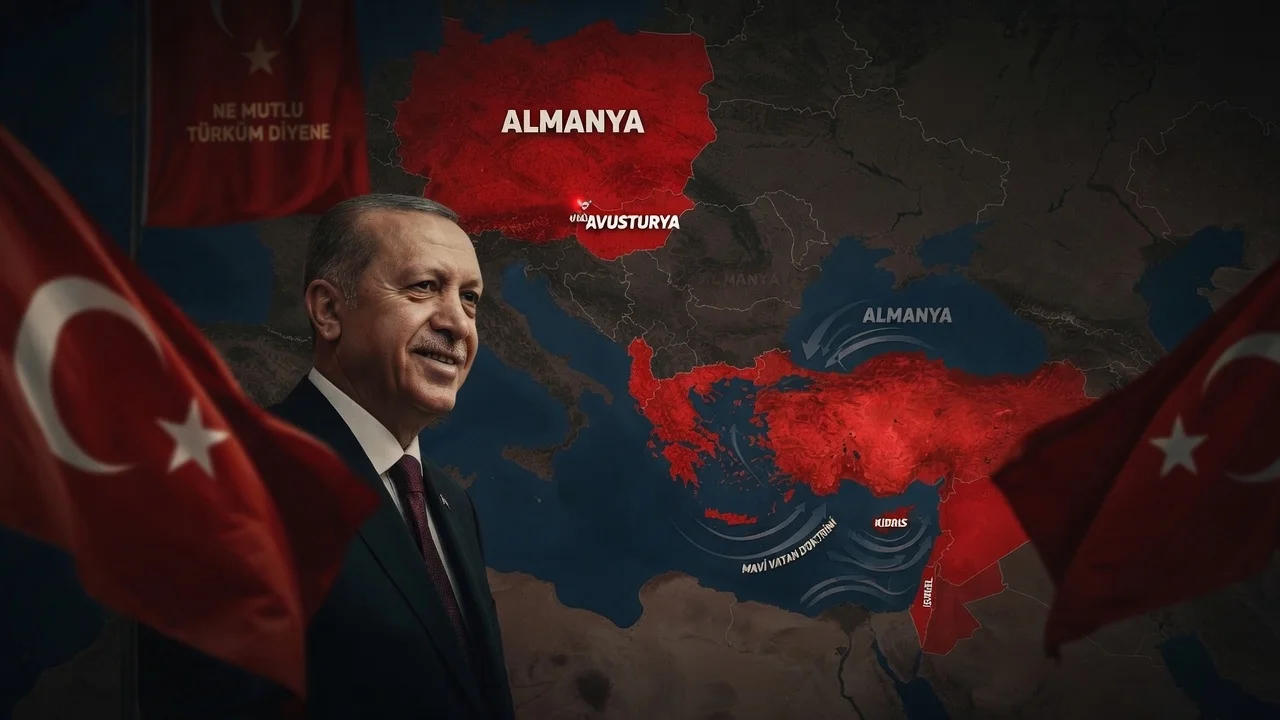
Turkey demands that the consequences of its settlement policy in northern Cyprus be accepted as permanent, while expecting European countries to regard Turkish communities inside their own borders as an extension of Ankara’s political, cultural and religious sphere.
Germany hosts mosques whose imams have traditionally been trained, selected and paid by the Turkish state, organisations closely connected to the AKP seek influence among German voters of Turkish origin, and Turkish intelligence monitors opponents of Erdoğan on German territory.
Germany’s own domestic intelligence service describes this plainly as espionage, transnational repression and political influence.
Turkey simultaneously presents itself as the indispensable guardian of Turkish Cypriots and the permanently aggrieved victim of Greek hostility, while maintaining an explicit threat of war against Greece over the possible exercise of a maritime right recognised by international law.
It challenges Greek jurisdiction in the Aegean, teaches the expansionist “Blue Homeland” doctrine in schools and continues to dispute the status and military protection of Greek islands.
Israel has increasingly been included in this arrangement.
In July 2024, Erdoğan suggested that Turkey might intervene against Israel as it had intervened in Libya and supported Azerbaijan in Nagorno-Karabakh, declaring that Turkey could “do similar to them” if it possessed sufficient strength.
Israel responded by calling on NATO to act against Turkey.
By June 2026, Erdoğan was describing Israeli operations in Syria and Lebanon as a direct threat to Turkey and insisting that Israel’s regional power had to be stopped. Turkey is entitled to criticise Israeli conduct, including actions in Gaza, Syria or Lebanon. What is harder to reconcile is Ankara’s habit of combining such criticism with suggestions of Turkish military intervention while simultaneously requesting advanced Western aircraft, access to European defence programmes and recognition as an indispensable security partner.
The pattern is therefore not difficult to identify. Turkey occupies part of Cyprus, threatens Greece with war under specified circumstances, has openly floated intervention against Israel, deploys troops and military power across several neighbouring regions, and operates extensive political, religious and intelligence networks inside European countries.
Yet European officials continue to describe Ankara primarily as a difficult but essential partner whose cooperation must be preserved through incentives, dialogue and tactful vocabulary.
Cyprus is not an inexplicable disagreement between two communities that developed in isolation. It forms part of a wider Turkish policy in which sovereignty is treated as sacred when it belongs to Turkey and negotiable when it belongs to Greece or Cyprus.
One Cyprus, Not Two Turkish States
A unified federal Cyprus remains the reasonable solution.
It should provide strong constitutional guarantees, political participation, religious freedom and Turkish-language rights for indigenous Turkish Cypriots inside one sovereign Cypriot state.
It should also end the Turkish military presence, unilateral foreign intervention rights and the fiction that five decades of occupation and demographic transformation have created a second sovereign country entitled to international recognition.
Such a federation would not require Turkish Cypriots to become Greek or Christian. It would require them to become citizens of the same secular European republic as Greek Cypriots, protected by common institutions rather than permanently dependent on Ankara.
The division between the communities could then be addressed through federal government, local autonomy and enforceable rights instead of foreign troops, imported nationalism and an administration recognised only by the country that created it.
The European Union already possesses the leverage to support this outcome.
There is no mysterious Cyprus issue. There is one European country, two native communities and one foreign army that has remained on the island since 1974.
Cyprus must be reunited, Turkish Cypriots must be protected, and Turkey must leave.
Sources
You might also like