Two Out of Four: How the Entertainment Industry Aligns Productions with Awards and Funding Standards
Hulu has ordered a pilot written and directed by Ryan Coogler, with Danielle Deadwyler and Himesh Patel playing two highly decorated but very different FBI agents assigned to reopen a long-shuttered division devoted to unexplained phenomena.
Original creator Chris Carter remains attached as a non-writing executive producer.
The two agents are not officially called Fox Mulder and Dana Scully, which provides the production with a useful layer of technical protection.
United States
For the Oscars, films competing for Best Picture must satisfy two of four Representation and Inclusion Standards.
The four areas are on-screen representation, creative leadership and production teams, industry access and opportunities, and audience development.
The Primetime Emmys do not currently impose an equivalent two-out-of-four representation threshold on television programmes.
The Television Academy runs diversity and inclusion initiatives, but that is separate from formal Emmy eligibility.
Disney nevertheless introduced its own Content Inclusion Standards for its television operations, initially led by ABC Entertainment and National Geographic, intended to increase representation on screen, among writers and directors, and within production teams.
California also attaches DEIA requirements to public production subsidies.
Under Film and Television Tax Credit Program 4.0, every qualifying applicant reaching Phase II must submit a DEIA checklist or be disqualified.
Productions opting into the fuller DEIA process can receive 100 percent of their allocated credit if they demonstrate good-faith efforts toward their approved plan.
Pilots, new series and reboot series can qualify for the programme.
United Kingdom
The UK has the clearest television-specific system.
The BFI Diversity Standards cover on-screen representation, creative leadership and crews, industry access and training, audience development and accessibility.
BAFTA uses the standards as part of eligibility for various British Film, Television and Games Award categories, and the BFI makes them contractual requirements for its own funding.
Under the on-screen standard, at least one lead should come from an underrepresented group.
Secondary casting targets include 20 percent from underrepresented ethnic groups, 10 percent LGBTQ+, seven percent disabled, or a 50-50 gender balance. The standards also cover storylines, department heads, paid opportunities and audience accessibility.
European Union and European awards
Creative Europe MEDIA funds films, television series, documentaries, games and other audiovisual productions. Its programmes promote cultural diversity, equality and inclusion, and individual funding calls can require applicants to explain their gender-balance, inclusion and diversity strategies.
These considerations therefore form part of funding assessments, but the exact criteria vary by programme and call.
Separately, the European Film Academy uses Diversity and Inclusion Standards in its selection and awarding procedures. Its framework covers creative leadership, crews, career opportunities, audience outreach and on-screen representation, including ethnicity, skin colour, gender identity, sexuality, disability, religion, language and socioeconomic background.
Netflix
Netflix does not publish a checklist requiring every original film or series to satisfy a fixed number of representation standards.
The company measures gender, race and ethnicity, LGBTQ+ representation and disability across its US-commissioned films and series, both on screen and among creators, directors, writers and producers.
It has also operated a $100 million Fund for Creative Equity intended to create employment and training routes for underrepresented groups within the entertainment industry.
The New Audience Has Already Arrived
Fortunately, the entertainment industry has not waited for every country, awards organisation and streaming platform to agree on one universal form.
Productions have already begun modernising established stories, fictional universes and ancient civilisations for the new audience.
The important achievement is that artistic decisions, corporate priorities, subsidy conditions and awards frameworks increasingly point in the same direction, thereby saving everyone the inconvenience of distinguishing between them.
Christopher Nolan’s The Odyssey
Christopher Nolan’s adaptation of Homer casts Matt Damon as Odysseus, Anne Hathaway as Penelope and Tom Holland as Telemachus.
The wider Greek world includes Lupita Nyong’o as both Helen and Clytemnestra, Zendaya as Athena, Himesh Patel as Eurylochus and John Leguizamo as Eumaeus.
The film has therefore taken a story rooted in ancient and modern Greek culture and equipped it for distribution across every important modern demographic, taking a 6 mio donation from the Greek state and pissed off everybody with a couple of lessons of cultural / historical education.
Harry Potter
HBO’s new Harry Potter adaptation has cast Paapa Essiedu as Severus Snape, replacing the visual template established by Alan Rickman across eight films.
The production continues to describe itself as a faithful adaptation of the books, demonstrating that fidelity now means preserving the dialogue and major plot points while completely changing what those scenes mean.
A group of wealthy white boys can repeatedly humiliate and physically attack the Black Snape at school, but this will presumably remain ordinary adolescent bullying rather than racism because the script does not explicitly use the correct terminology.
Snape can later call Lily a “Mudblood” and join a blood-supremacist organisation, producing the fascinating story of a Black student who responds to persecution by becoming an enthusiastic supporter of magical racial purity.
The original books already included Black characters such as Kingsley Shacklebolt, Dean Thomas, Angelina Johnson and Lee Jordan. Expanding any of them, however, has not been considered.
The X-Files
The new X-Files pilot provides perhaps the cleanest technical solution.
Danielle Deadwyler and Himesh Patel play two new FBI agents rather than officially replacing Fox Mulder and Dana Scully. They will nevertheless occupy the familiar structure of two contrasting investigators reopening a neglected division concerned with unexplained phenomena.
KAOS
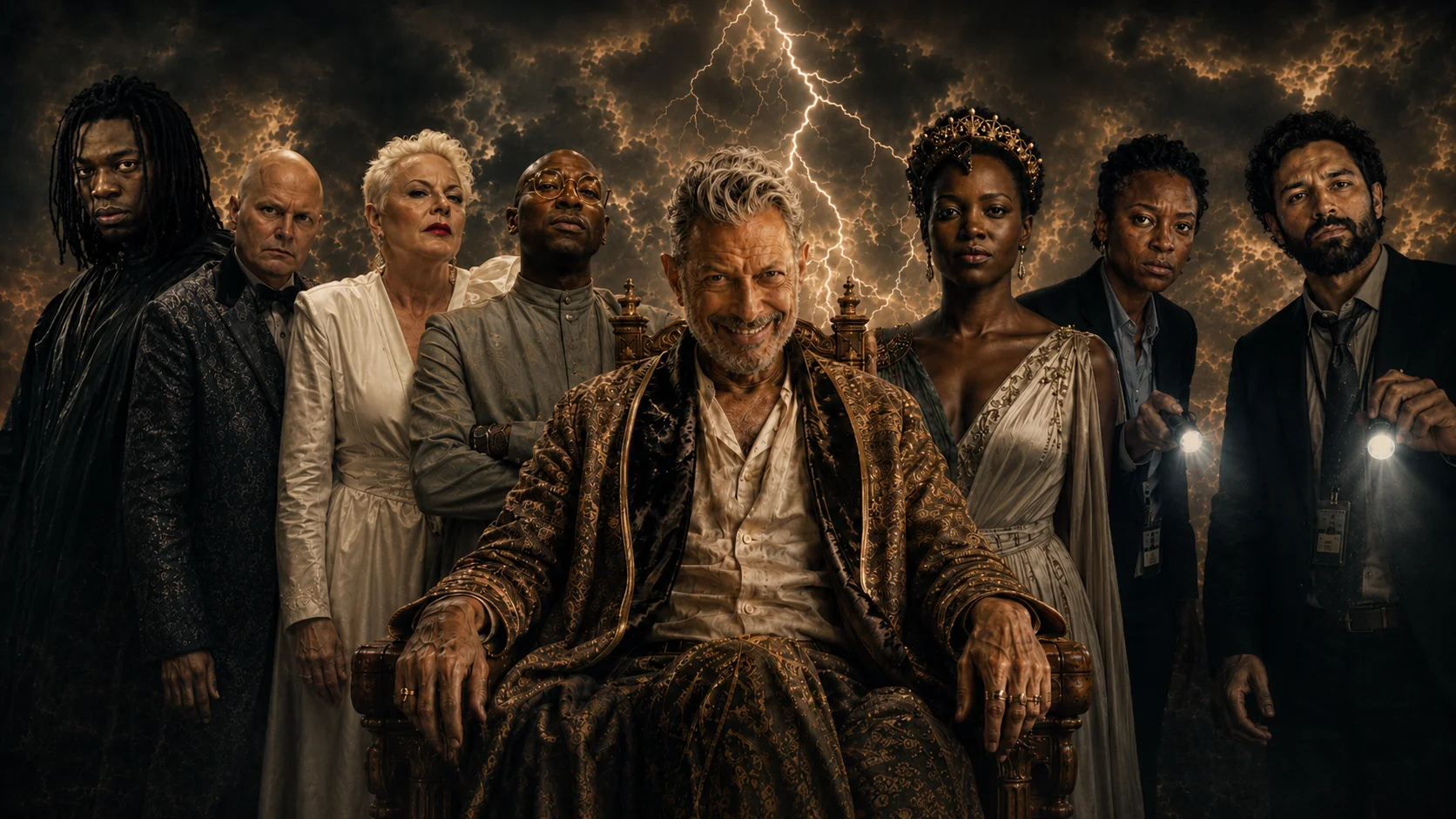
Netflix’s KAOS transformed Greek mythology into a contemporary international ensemble. Jeff Goldblum delivered one of the stronger performances as Zeus, while Cliff Curtis appeared as Poseidon, Nabhaan Rizwan as Dionysus, Rakie Ayola as Persephone, Aurora Perrineau as Eurydice and Misia Butler as Caeneus
The gods had survived several thousand years of war, religious conversion, cultural appropriation and the collapse of the civilisation that worshipped them.
Particularly memorable were the three Fates: Lachesis, Clotho and Atropos, played by Suzy Eddie Izzard, Ché and Sam Buttery. In Greek mythology, the three sisters spin, measure and finally cut the thread of every human life. In KAOS, they operate from a gloomy bar called The Cave.
The ancient Greeks imagined the Fates as three inexorable goddesses controlling the destiny of humanity.
Netflix cancelled KAOS after one season, but the inclusive reconstruction of Olympus had already been completed successfully.
Percy Jackson
Disney’s Percy Jackson and the Olympians cast Leah Sava Jeffries as Annabeth Chase and Aryan Simhadri as Grover Underwood, placing them beside Walker Scobell’s Percy as the central trio of the adaptation.
Once again, Greek mythology proved remarkably adaptable.
Athena’s daughter could be modernised, the satyr could be modernised and Mount Olympus could be modernised.
The lightning bolt remained unchanged because some elements of intellectual property still have licensing obligations.
Greek Mythology needs to bow to the new rules
There is something especially impressive about the entertainment industry’s fascination with Greek mythology.
Modern Greeks are not merely people who happen to occupy the territory where these stories were first told.
Ancient-DNA research has found substantial genetic continuity between modern Greeks and the Bronze Age populations of the Aegean, particularly the Mycenaeans. Later migrations added further ancestry, but they did not erase the older population.
After invasions, empires, occupations, religious transformations and several thousand years of general European enthusiasm for marching armies across other people’s land, the descendants of the civilisation that preserved these stories are still living in Greece.
Fortunately, their continued existence does not need to inconvenience the global entertainment industry.
Greek mythology has now become universal human property, available to be reconstructed according to the demographic requirements of whichever DEI-compliant corporation currently owns the production rights.
This is entirely appropriate because Greeks account for only a tiny fraction of the world’s population.
The same is true of white Europeans more generally. Most human beings live, after all, outside Europe and Northern America.
Representation Finally Goes Global
The industry should therefore be congratulated for recognising that stories created by small populations must be adjusted to resemble the population of the entire earthball.
It has, however, not gone nearly far enough.
If genuine global representation is the objective, there is no reason to stop after changing one or two established characters while leaving the remainder of the cast suspiciously connected to the culture being portrayed.
Every future production should reflect the actual demographic composition of humanity.
Greek mythology should contain only a very small number of Greeks.
Norse mythology should include approximately as many Scandinavians as Scandinavians represent within the global population.
British historical dramas should be overwhelmingly populated by people from outside Britain.
Japanese legends should not be permitted to hide behind geographical isolation, and African mythology must also be liberated from the outdated assumption that its characters should predominantly resemble the African populations that created it.
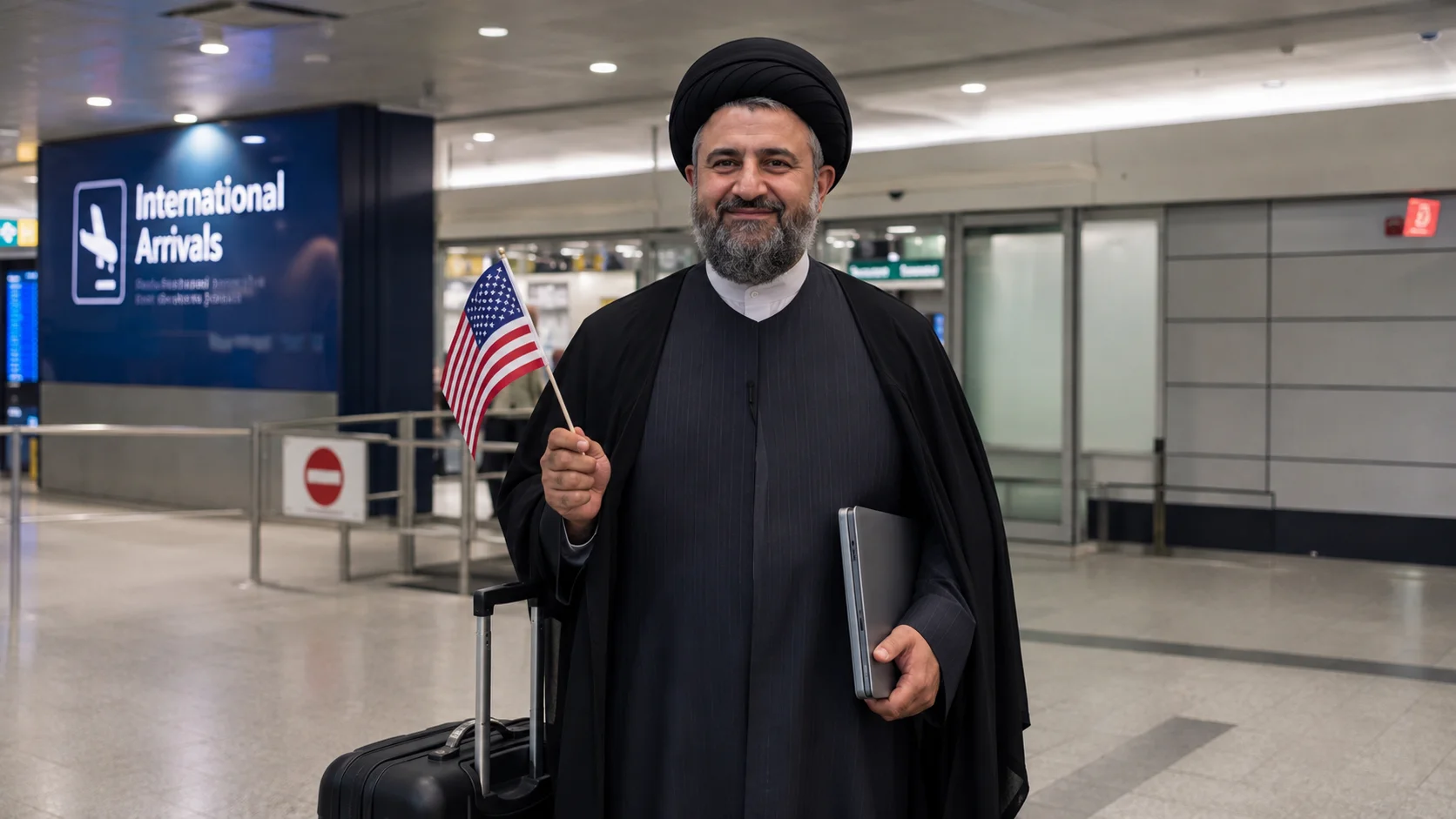
A new global casting formula could assign roles according to worldwide population shares, ensuring that every village, royal family, isolated mountain tribe and ancient religious order accurately resembles an international airport terminal.
Consistency is essential.
Sources
You might also like