EU and Britain show their love for Linux by banning it. Only de facto, not de jure.
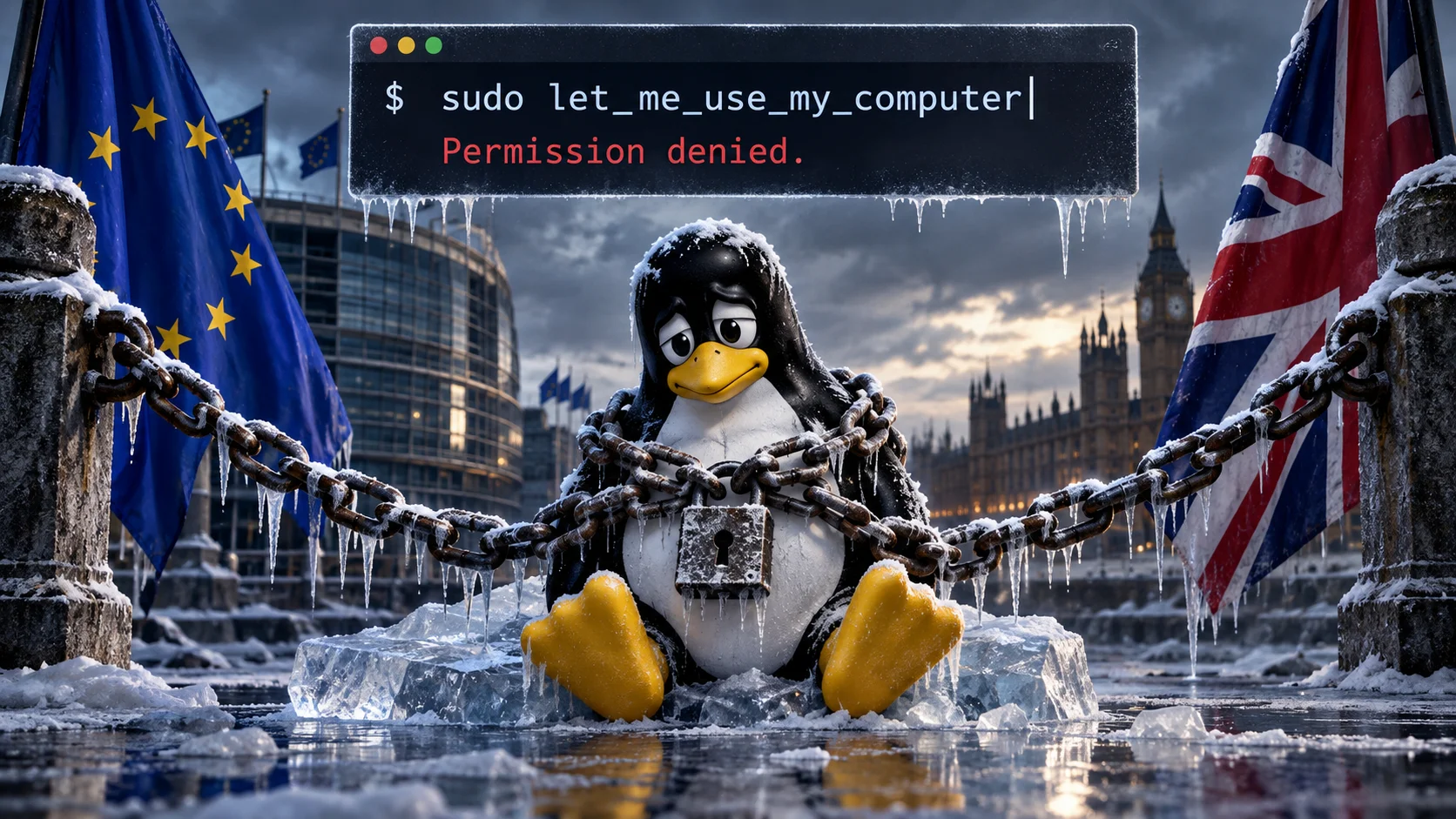
Linux is everywhere. It powers much of the world's server infrastructure, underpins cloud computing, runs supercomputers, supports countless embedded devices and provides millions of people with an alternative to the proprietary operating systems of Microsoft and Apple.
And perhaps most importantly, Linux is free software.
Not merely free of charge, but free in the sense that users can examine it, modify it, share it and decide for themselves how their computers should operate.
Now, the European Union has adopted a revised Product Liability Directive that explicitly includes software, with its new regime applying to products placed on the market from 9 December 2026.
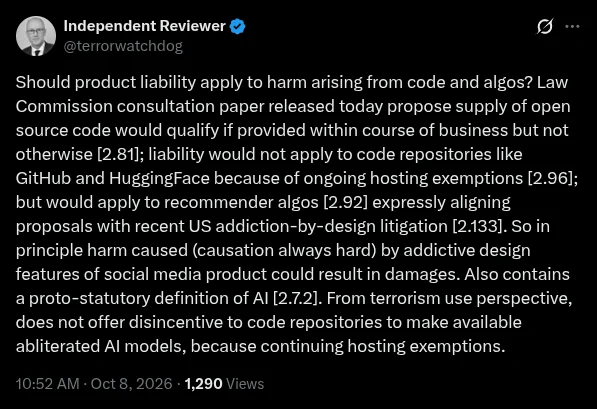
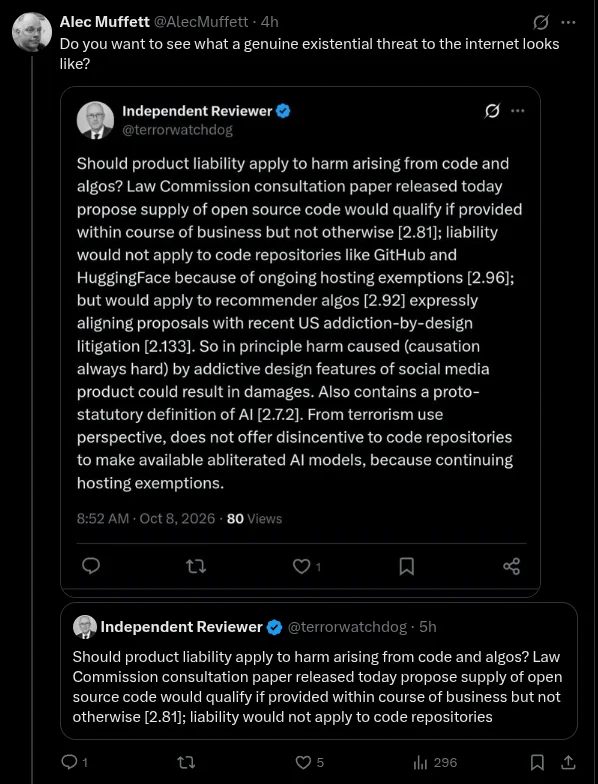
The UK's Law Commission launched a consultation on 8 October 2026 proposing to extend product liability to software, artificial intelligence and other digital products.
The stated purpose is consumer protection. If defective software causes harm, somebody should be accountable. That sounds perfectly reasonable, until one considers how Linux and open-source software are actually developed.
How do you regulate something nobody owns?
Linux is not produced by a single manufacturer with a centralised development department. It is the result of decades of collaboration between volunteers, independent developers, universities, foundations and commercial companies.
A programmer might contribute a small improvement to the kernel. Another developer might fix a security issue. A hardware manufacturer might publish a driver. A distribution such as Debian might package the resulting software, while companies such as Red Hat and Canonical build commercial services around it.
This arrangement works precisely because participants are free to contribute, modify and reuse code without negotiating a new legal agreement with every other participant.
It is a system built around openness, shared responsibility and voluntary cooperation.
The new liability frameworks introduce a rather different philosophy.
Software can be treated as a product, and businesses supplying it commercially may face strict liability for defects causing legally recognised harm, even without proof of negligence.
The legislation does include exclusions for genuinely non-commercial open-source development.
Protecting volunteers from liability is of limited comfort if the companies making their software useful can no longer afford the risks of distributing it.
Nobody needs to ban Linux
A small business developing specialised industrial equipment might choose Linux because the source code is available, the software can be customised, and there are no conventional proprietary licensing costs.
Now introduce a broader liability regime under which the manufacturer may be responsible for harm caused by defective software incorporated into its product.
The manufacturer must consider legal exposure, insurance, security maintenance, documentation and the costs of defending potential claims.
Widening and clarifying liability for software could increase those costs, particularly for smaller companies.
It might reconsider using independently maintained software, purchase an expensive commercially supported distribution, limit its products or leave the market altogether.
Linux depends heavily on commercial contributions. Companies fund kernel development, write drivers, fix security vulnerabilities and support hardware because Linux is useful to their businesses.
Reduce those incentives, and the effects could travel through the entire ecosystem.
Fewer contributions could mean weaker hardware support, slower development and more pressure on the remaining maintainers. At the end of that chain sits the ordinary user, wondering why their perfectly functional computer isn't working.
There would be no need to prohibit Linux installations.
The legal freedom to use Linux could survive while Linux becomes unusable.
And while we're here, let's check your age
This is not the only area where governments are interested in what happens inside people's computers.
Both Britain and the EU are expanding their approaches to digital age verification.
The European Commission has developed an EU-wide age-verification framework.
Adults would be able to disable those protections after establishing that they are over 18 through an age-assurance process. The government has also indicated that it could legislate if industry does not implement the measures.
This is not yet a requirement for Linux. And, as Linux goes, never will be.
But the underlying direction raises an important question.
Since when did an operating system become an appropriate place for the government to decide what its owner may view or do?
Regulating a working system to death
Linux is one of the most successful examples of voluntary global cooperation in computing history.
People who have never met, living under different legal systems and working for competing organisations, collaborate to produce software used throughout the modern economy.
It isn't perfect. Security vulnerabilities exist. Maintainers burn out. Commercial companies sometimes benefit more than they contribute.
But the system has survived for decades, and much of the world's digital infrastructure depends on it.
And hey - Linux users are not terrorists. If the gov's specialists aren't able to handle Linux, they won't be able to handle other means of illegal communication. Regulating it won't help.
If a law preserves the theoretical right to use Linux while making its independent development and commercial distribution increasingly difficult, how meaningful is that freedom?
Sources
Mohlo by vás zaujímať