Germany Revisits Its Rich Tradition of Building Things That Make Other Countries Want to Bomb It
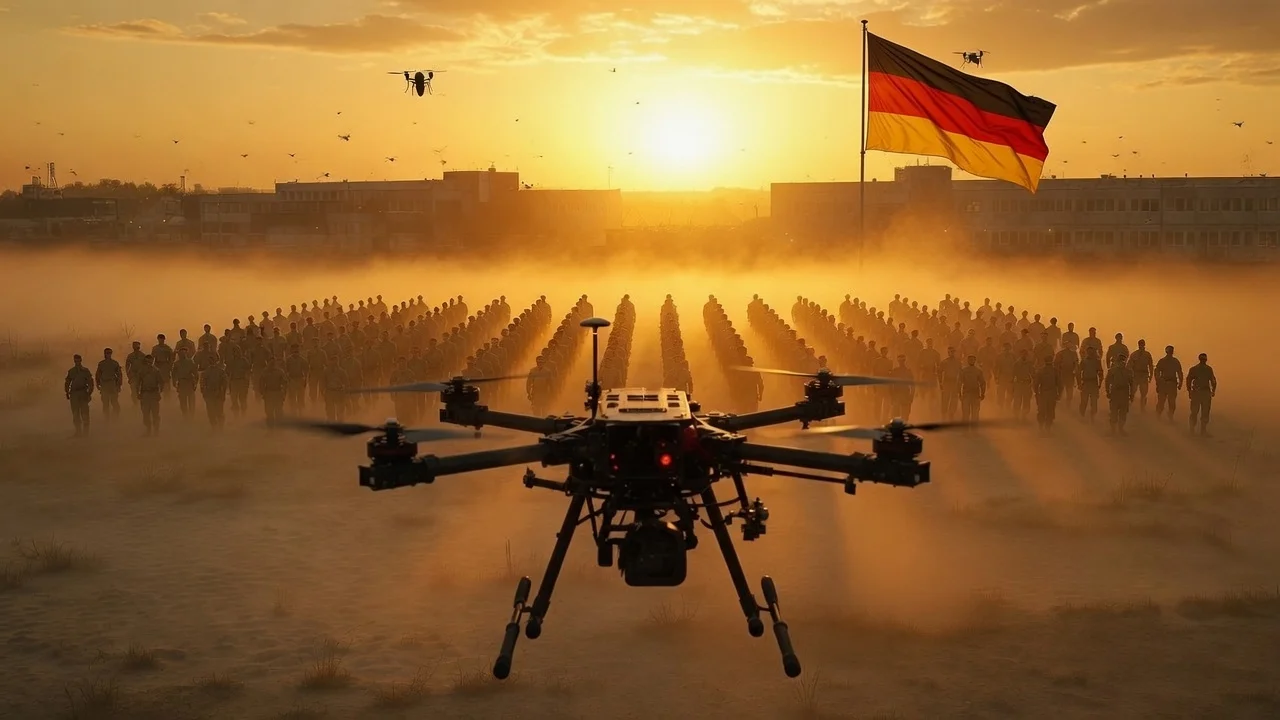
From tanks to drones: once again German industry is ramping up war production. This time, solar powered ☀️.
In mid-February 2026, Defense Minister Boris Pistorius and Ukrainian President Volodymyr Zelenskyy visited the Quantum Frontline Industries plant in Gauting. They officially marked the start of production and the handover of the first drones built in Germany for Ukraine as part of the German-Ukrainian joint venture.
Pistorius announced further military cooperation of German company Quantum Systems with Ukrainian partners. One line produces drones. Another produces TerMit unmanned ground vehicles.
The factories and assembly halls are in Germany - Bavaria and further sites in planning. The finished goods go to the Ukrainian armed forces. The bill, as usual, goes to the German taxpayer.
Germany has already committed well over 90 billion euros in various forms of Ukraine support since 2022.
The new arrangement simply moves one step further: instead of shipping finished weapons from existing stocks, Germany is now building the production capacity on its own soil.
German companies receive the contracts.
Ukrainian forces receive the hardware.
The only party that was not asked is the German population.
This is presented as a purely defensive and industrial measure.
In practice it means that production sites, supply chains, and the people working in them are now part of the logistics chain of a war that is being fought with long-range weapons on both sides.
Russia has already made its position clear.
Lists of companies involved in drone production for Ukraine have been published, and German authorities have had to summon the Russian ambassador over direct threats against German firms. The official response was that Germany will not be intimidated. The practical reality is that a new category of high-value targets now exists inside the country.
For years the official line was that Germany would supply weapons but would not become a party to the conflict.
- Early 2022: "Defensive weapons only," helmets, sanctions.
- 2023–2024: Heavy armor (Leopard tanks), long-range systems (Storm Shadow/SCALP, later ATACMS), training on European soil.
- 2025–2026: Joint production facilities on German soil, drone factories, plans for longer-range systems developed together.
Each step was presented as limited and defensive at the time. Each step normalized the next one. Russia has consistently framed this as NATO/EU countries becoming co-belligerents through logistics, training, intelligence, and now production.
The government has simultaneously been talking about Germany needing to become war-capable again - societally and militarily.
It is an interesting word choice. Becoming war-capable usually implies preparing to defend your own territory. In this case it appears to involve creating new reasons for someone else to attack it.
Whether these facilities will enjoy the same reliable energy supply as the industries that have already left the country remains an open question. In the worst case, Germany’s contribution to the war effort might end up being limited to daytime shifts when solar generation is strong.
No referendum was held on whether German citizens wanted their country to host production facilities for weapons that are actively being used against Russia. No broad public debate preceded the decision to turn German industrial sites into potential objectives.
The usual parliamentary procedures were followed, which in practice means the decision was taken by the same political class that has managed the entire escalation ladder since 2022. The population is expected to accept the costs, the risks, and the occasional "Slava Ukraine!" at the end of official speeches as the price of being on the "right side of history".
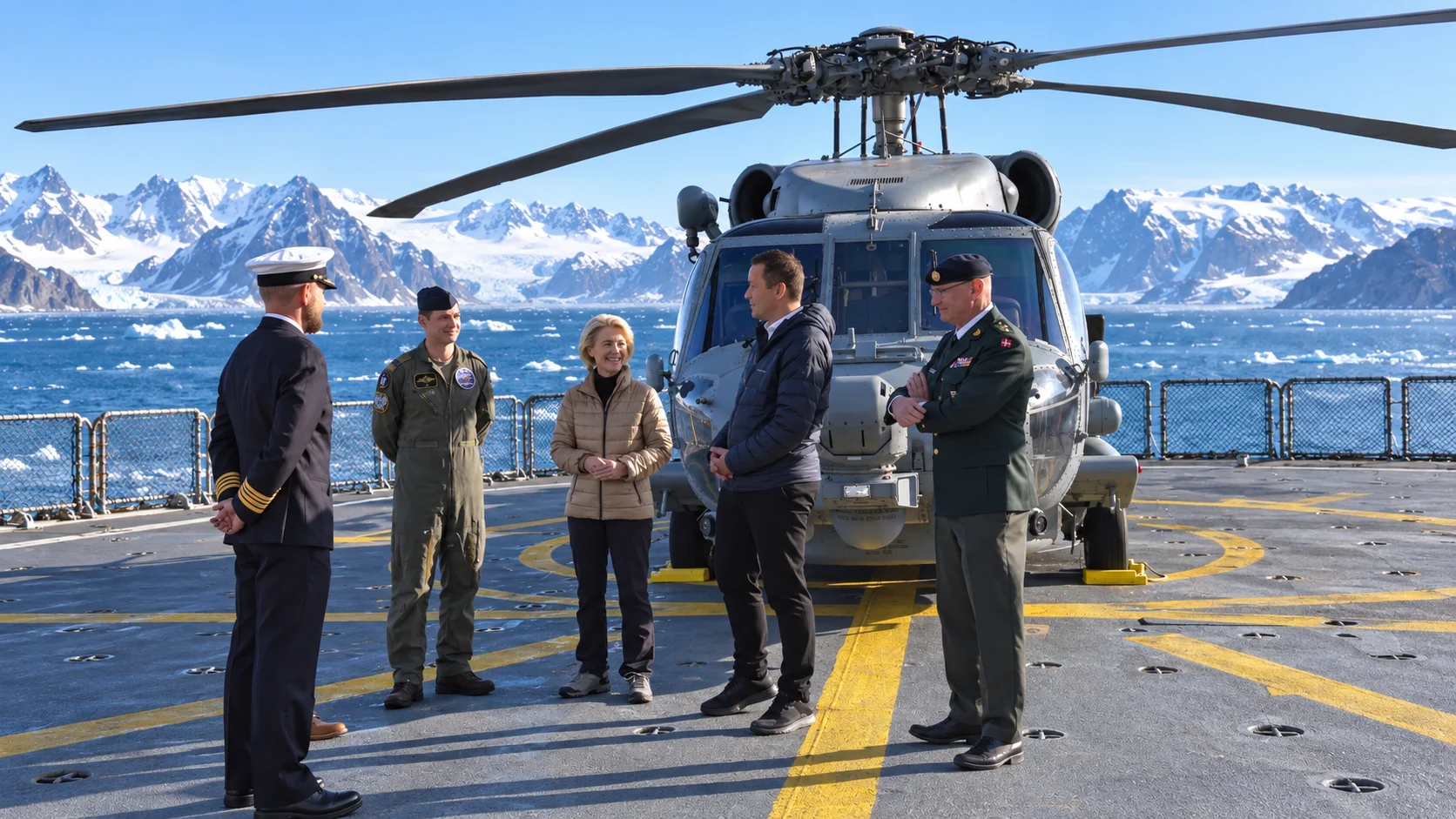
Commission President Ursula von der Leyen - with German origins - has been among the most consistent voices pushing for sustained military support, sanctions, and the integration of Ukrainian defense production into European structures.
The EU operates its own large-scale aid instruments, including the Ukraine Facility worth over 50 billion euros, and coordinates joint procurement efforts. While the policy is not supported equally by all member states - Hungary has repeatedly blocked or delayed steps - the European Commission and the core group of Germany, France, Poland and the Baltic states have continued to drive deeper industrial and military cooperation forward.
At the same time, the EU continues to push for Ukraine’s full accession despite the country remaining in active war, operating without elections, and showing persistent corruption problems that have not been resolved.
Normal accession rules require stable democratic institutions, functioning rule of law, and the absence of open conflict. By treating these requirements as flexible, the EU is creating a dangerous precedent.
There is a certain historical symmetry at work.
Germany has form when it comes to large-scale industrial mobilization.
What is harder to dispute is that German territory is now more directly connected to the Ukrainian war effort than at any point since 1945.
In the end it may turn out that the most effective contribution Germany could make to European security was not building more weapons, but remembering why it spent several decades trying very hard not to.
You might also like